
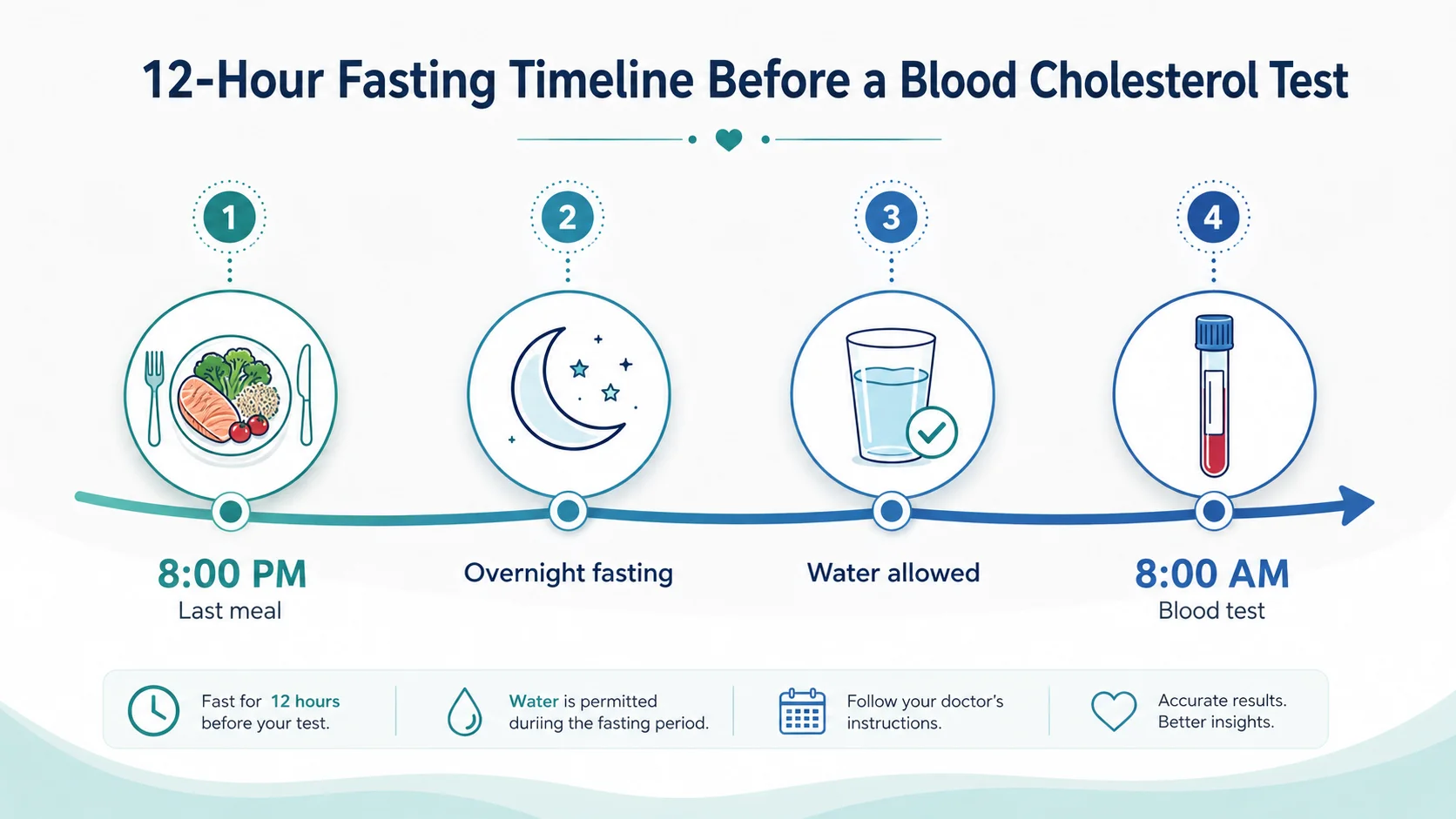
For many people, a lipid profile is done after fasting for several hours, usually overnight. Plain water is generally fine. Your doctor or the lab will tell you whether fasting is needed in your case, since this can depend on the type of test and your health situation.
What is a lipid profile test?
A lipid profile is a simple blood test that looks at the fats, called lipids, in your blood. These fats are a normal part of how your body stores and uses energy, but the levels can tell your doctor useful things about your overall heart and vascular health.
The test usually checks a few key things. Total cholesterol gives an overall picture of the cholesterol in your blood. LDL cholesterol is often described in everyday language as the type that can build up in blood vessels over time. There is also HDL cholesterol, frequently referred to as the more protective type, and triglycerides, which are another form of fat the body uses for energy.
You do not need to memorise any of these terms. The main thing to understand is that a lipid profile brings several of these measurements together so a doctor can look at the bigger picture rather than one number alone. At a diagnostic lab such as Chughtai Lab, this is one of the more commonly requested routine blood tests.
Why fasting may be advised before a lipid profile
The idea behind lipid profile fasting is fairly straightforward. When you eat, especially foods containing fat, the levels of certain lipids in your blood can rise for a few hours. Triglycerides in particular tend to be sensitive to recent meals.
Fasting before the test helps reduce the effect of your last meal so the results reflect your usual baseline rather than what you ate that morning. This is why a cholesterol test fasting window, often around nine to twelve hours, has traditionally been recommended.
It is worth knowing that fasting is not always required. Some lipid measurements can be done without fasting depending on the situation, and modern practice has become more flexible in certain cases. Because of this, the safest approach is simple. Follow the specific instructions given by your doctor or the lab where you are getting tested, rather than assuming.
What to eat before the test
This part often confuses people, so here is the calm version. If you have been advised to fast, then the goal during the fasting window is to avoid eating altogether, not to eat something “light” instead.
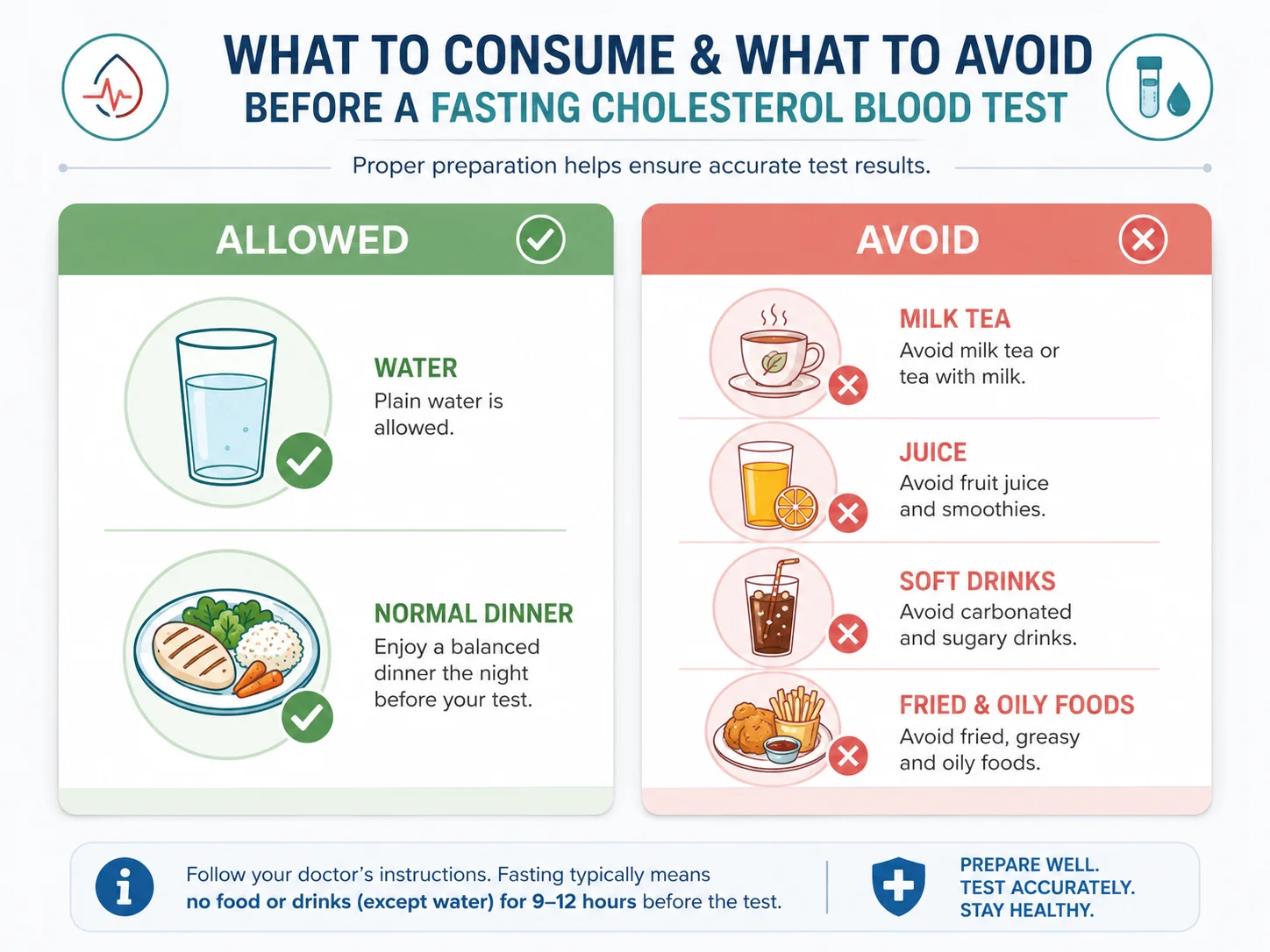
What matters more is the meal before your fasting period begins. A normal, balanced dinner is generally fine. There is no need to dramatically change your diet the night before a lipid panel fasting test, because doing so will not give a more accurate picture of your usual levels. In fact, eating very differently from your routine can be counterproductive.
So the practical takeaway is this. Eat your usual evening meal at your usual time, then begin the fasting window as instructed and avoid food until the sample is taken.
What to avoid before the test
During the fasting window, the main thing to avoid is food of any kind, including snacks, sweets, milky tea, juices, and soft drinks. Many people forget that a cup of tea with milk and sugar counts as breaking a fast for testing purposes.
Sugary and very fatty foods in the hours leading up to the fasting period are also worth being mindful of, since they can influence certain readings. Alcohol is generally discouraged before lipid testing because it can affect triglyceride levels, and in Pakistan this is rarely a factor for most readers anyway.
It is also sensible to avoid heavy, fatty late-night eating right before you start fasting. A reasonable, ordinary dinner does the job better than an unusually rich one.
Can you drink water before a lipid profile?
Yes, plain water is usually allowed and is often encouraged. Staying lightly hydrated can make the blood draw a little easier and more comfortable.
The key word here is plain. Water with nothing added is fine, but flavoured water, juices, fizzy drinks, tea, coffee, and milk are not the same thing and can interfere with a cholesterol test fasting requirement. If you are unsure, plain water is the safe choice, and you can confirm anything specific with the lab.
When doctors may recommend cholesterol testing
Doctors may suggest a lipid profile in several everyday situations. It is often included as part of a routine health check, particularly as people get older. It may also be recommended when someone has a family history of heart-related conditions, or other health factors that a doctor wants to keep an eye on.
A doctor may also advise repeat testing over time to see how lipid levels are tracking, especially if lifestyle changes or other measures are being followed under medical guidance. The decision about when and how often to test is best made by a doctor, because it depends on your overall health, age, risk factors, any medicines you take, and your personal and family history.
This is also why results should always be interpreted by a doctor rather than judged on your own. The same number can mean different things for different people, and ranges vary by lab and clinical context.
What a lipid profile generally helps assess
A lipid profile can help a doctor assess your general lipid levels and consider them alongside the rest of your health picture. It does not, on its own, diagnose any condition. Instead, it gives useful information that may indicate whether further discussion, monitoring, or assessment could be helpful.
Think of it as one piece of a larger puzzle. A doctor looks at lipid results together with things like blood pressure, lifestyle, family history, and other tests when relevant. No single value tells the whole story, which is why professional interpretation matters so much.
Related cholesterol tests you may hear about
Sometimes a doctor may ask for individual tests rather than, or in addition to, a full panel. You might come across a Direct LDL Cholesterol test, which focuses specifically on that LDL measurement. There is also Serum Triglycerides, which looks at triglyceride levels on their own, and Serum Total Cholesterol, which measures overall cholesterol.
These are often grouped together within a standard Lipid Profile, but they can also be requested separately when a doctor wants to focus on something particular. If your prescription mentions one of these by name, it simply means the doctor wants that specific measurement, and the lab can guide you on any preparation needed.
Common mistakes before testing
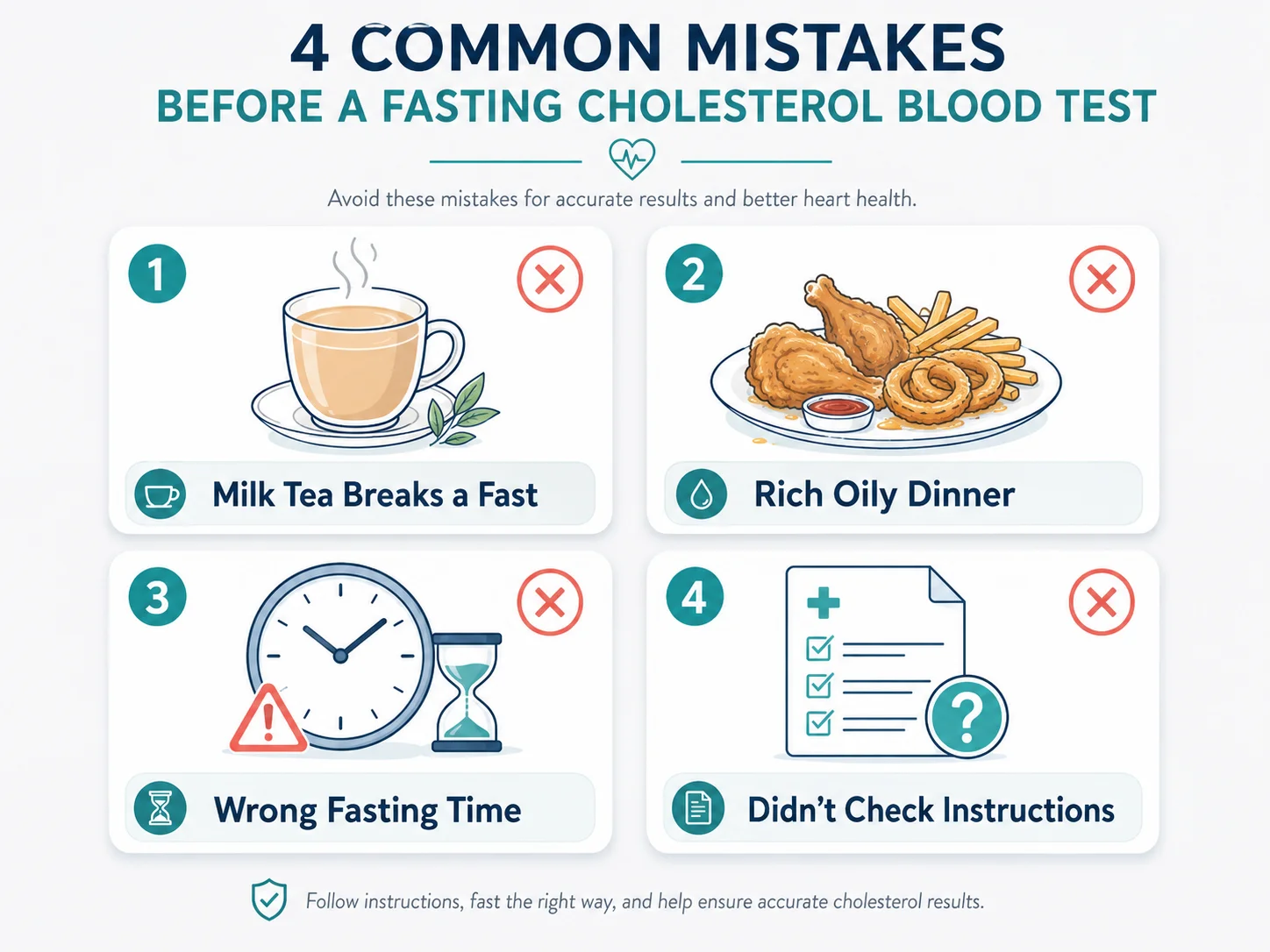
A few simple slip-ups come up again and again, and they are easy to avoid once you know about them.
- Having morning tea or coffee with milk and sugar, forgetting that this breaks the fast.
- Eating an unusually heavy or oily meal the night before, instead of a normal dinner.
- Fasting for far too long or too short a time instead of following the advised window.
- Assuming fasting rules without checking, when the actual instructions can vary by test and person.
Avoiding these small mistakes helps make sure the sample reflects your usual levels rather than a one-off situation.
FAQs
Is fasting required for a lipid profile?
Often it is advised, commonly for around nine to twelve hours, but not always. Whether you need to fast can depend on the specific test and your situation, so follow the instructions given by your doctor or the lab.
What should I eat before a lipid profile test?
If fasting has been advised, you should avoid food during the fasting window rather than eating something light. Before the fasting period begins, a normal, balanced meal at your usual time is generally fine.
Can I drink water before a cholesterol test?
Yes, plain water is usually allowed and can even make the blood draw more comfortable. Avoid tea, coffee, juice, milk, and flavoured or fizzy drinks during the fasting window.
What happens if I do not fast before the test?
Recent food, especially fatty meals, can temporarily affect some readings such as triglycerides. If you did not fast as advised, tell the lab or your doctor, as the test may need to be rescheduled or interpreted with that in mind.
Which tests are included in a lipid profile?
A lipid profile generally brings together measurements such as total cholesterol, LDL cholesterol, HDL cholesterol, and triglycerides. Related individual tests like Direct LDL Cholesterol, Serum Triglycerides, and Serum Total Cholesterol may also be done separately when needed.
Book a Lipid ProfileIf your doctor has advised a cholesterol check, you can book a Lipid Profile and follow the simple fasting guidance above for a smoother experience. Chughtai Lab offers routine lipid testing to support you and your doctor in keeping track of your health. When in doubt about preparation, the lab team can confirm exactly what you need to do. |



