
A urine culture test checks whether bacteria are growing in your urine and which medicines may work against them. A doctor usually recommends it when there are urinary symptoms or an unclear routine urine result. Giving a clean sample is the most important step for a reliable report.
What is a urine culture test?
A urine culture test is a laboratory test that places a small amount of your urine in a special environment where bacteria, if present, can grow over a day or two. If something grows, the lab can study it more closely.
The word “culture” simply means growing bacteria in the lab so they can be identified. The “sensitivity” part, which is why it is often called a urine c/s test, checks which antibiotics may be effective against the bacteria found. Antibiotics are medicines that act against bacteria, and sensitivity testing helps a doctor choose the most suitable one rather than guessing.
This is why the full name is often written as Urine Culture / Sensitivity (C/S). It is one of the more informative tests when a urinary infection is suspected, and at labs such as Chughtai Lab it is a commonly requested investigation.
Urine C/E vs urine culture: what is the difference?
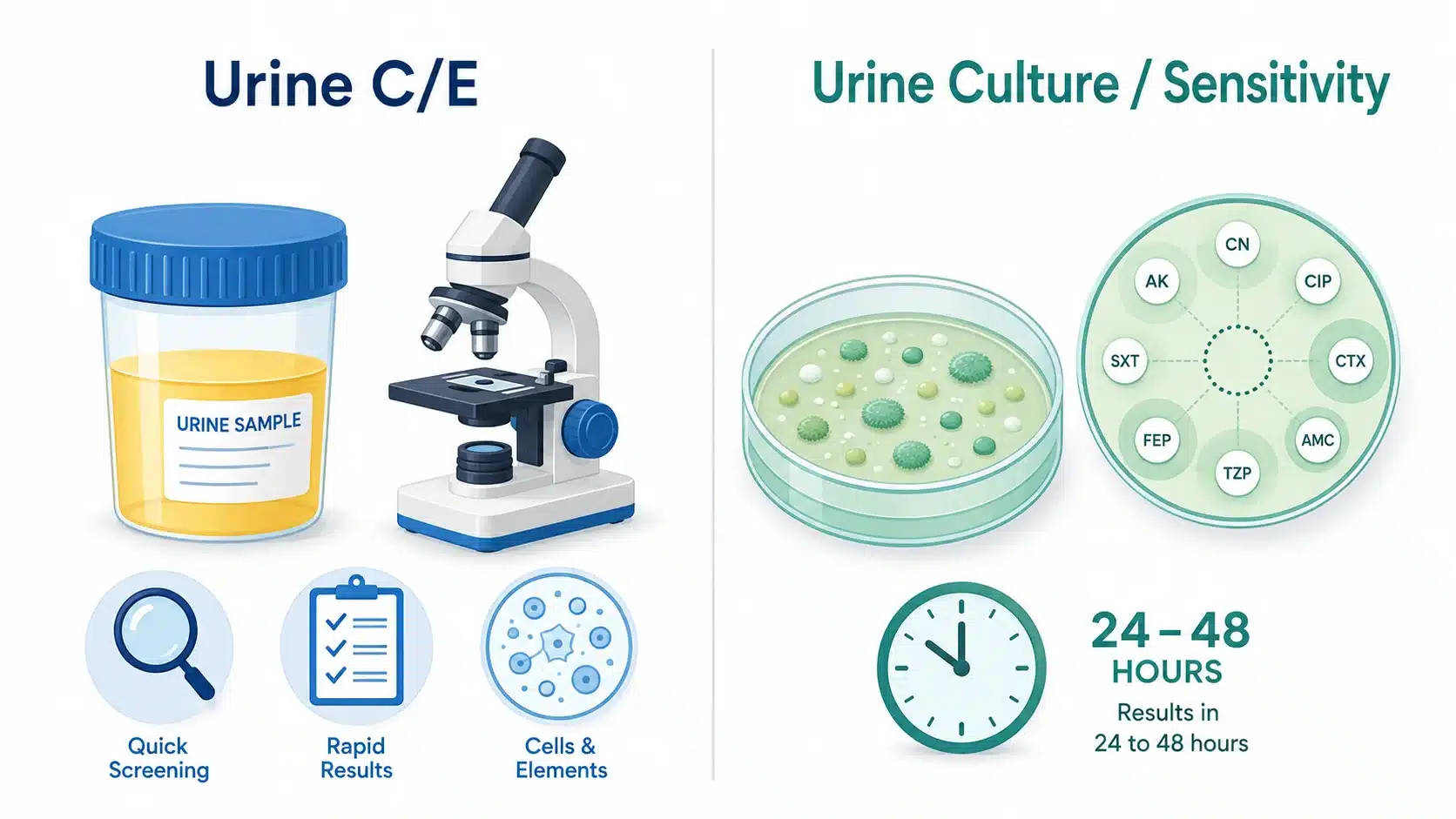
People often mix these two up, so it helps to separate them clearly.
A Urine C/E (Complete, Analysis), sometimes called urine routine or urine R/E, is a quick screening test. It looks at the physical and chemical nature of urine and checks for things like pus cells, blood, protein, and sugar under a microscope. It can suggest that something may be wrong, but it does not identify the exact bacteria.
A urine culture goes a step further. It actually grows and names the bacteria and then tests which medicines may work. In short, the routine test raises a flag, and the culture explains what is behind it. Doctors frequently use them together: the urine infection test screening first, then a culture if needed for confirmation.
When doctors may recommend a urine culture test
A doctor may suggest this test when symptoms point toward a possible urinary issue. Common reasons include a burning sensation while passing urine, needing to urinate very often, lower abdominal discomfort, cloudy or strong-smelling urine, or fever that does not have an obvious cause.
It may also be advised when a routine urine report shows findings that need closer study, when symptoms keep coming back, during pregnancy as part of routine care, or before certain procedures. People with diabetes or recurring urinary complaints are sometimes asked to repeat this test as well.
A urine culture test does not diagnose anything on its own. It provides information that a doctor reviews along with your symptoms and history before deciding what it may indicate.
How to give a proper urine sample
This is the part that affects your result the most, so it is worth doing carefully. The goal is a “clean catch” sample, meaning urine collected in a way that avoids contamination from the skin.
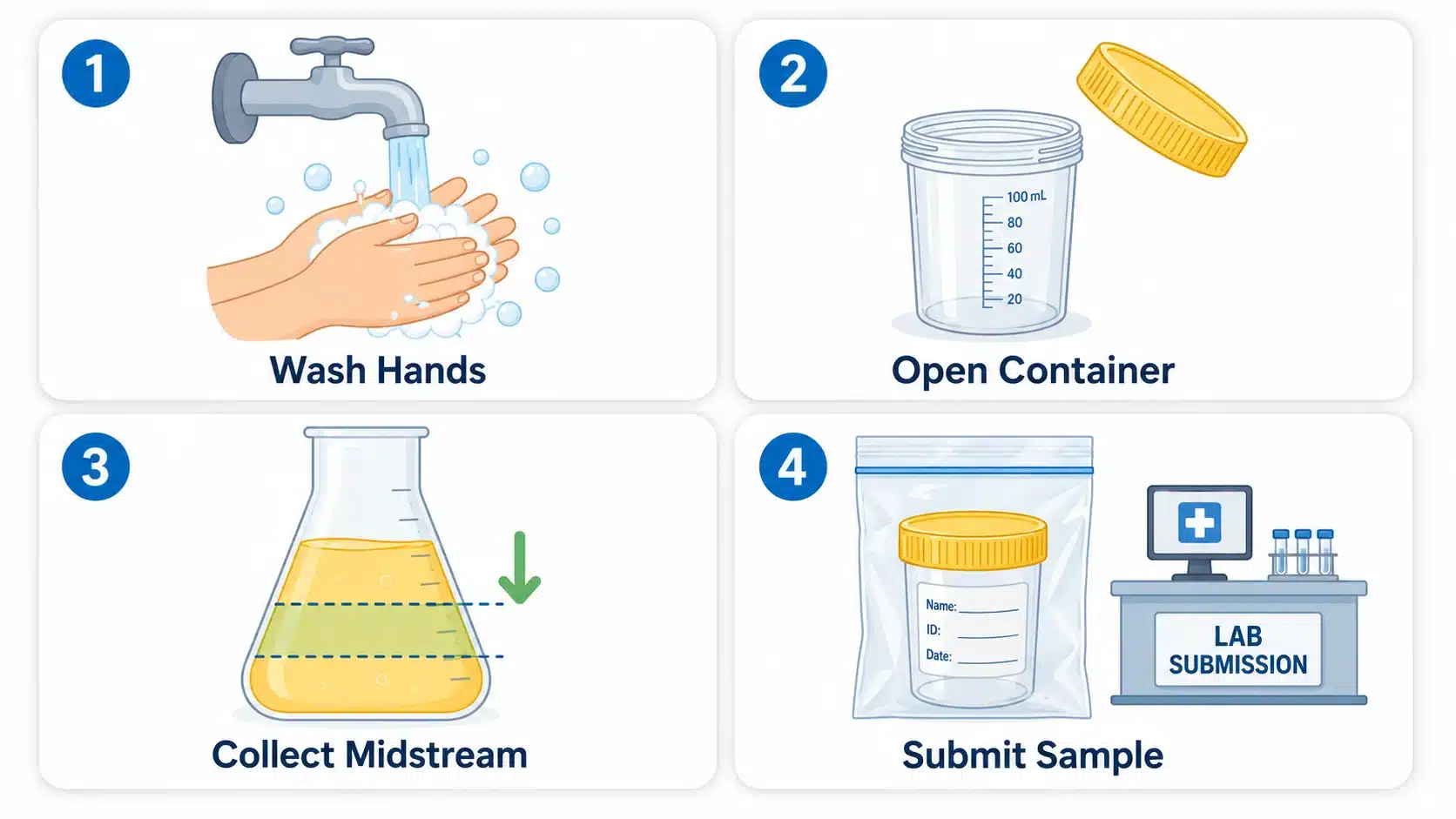
Here is a simple way to collect it correctly:
- Wash your hands well, then clean the genital area with water and pat dry before you start.
- Begin urinating into the toilet for a second or two, then collect the middle part of the stream in the sterile container without stopping the flow.
- Fill the container to the level advised, close the lid firmly, and avoid touching the inside of the container or its rim.
- Hand the sample to the lab quickly, ideally within a short time, or follow staff instructions if there is any delay.
An early morning sample is often preferred because urine is more concentrated then, but follow whatever your doctor or the lab advises in your specific case.
Why clean sample collection matters
A urine culture is sensitive by design. It is meant to detect even small amounts of bacteria. That strength becomes a weakness if the sample picks up bacteria from the skin instead of the urinary system.
When that happens, the report may show mixed growth or unclear findings. This can lead to a repeat test, extra waiting, and confusion for both you and your doctor. A few careful minutes during collection often saves a second visit and gives a result everyone can trust.
Common mistakes that can affect results
Some everyday mistakes quietly affect accuracy. Skipping the cleaning step before collection is a frequent one, as is collecting the very first part of the urine stream instead of the middle portion. Touching the inside of the container, leaving the sample sitting for too long before handing it over, or using a container that is not sterile can also interfere with the result.
One more point worth knowing is that recent antibiotic use can lower bacterial growth in the sample, which may mask what is actually happening. If you have taken any medicine recently, mention it to your doctor or the lab staff so the report can be understood in the right context.
What culture and sensitivity generally help assess
In simple terms, the culture part helps assess whether bacteria are present and what type they are. The sensitivity part helps assess which antibiotics those bacteria may respond to.
Together, this information can help a doctor move from a general suspicion toward a more informed decision. It is important to remember that only a doctor should interpret these results, especially if you have symptoms or have recently used antibiotics. The same numbers can mean different things for different people, which is why professional review matters.
Related urine and infection tests you may hear about
Depending on the situation, a doctor may combine a urine culture with other tests for a fuller picture. A Urine C/E (Complete, Analysis) is often done alongside it as an initial screen. In cases where a doctor wants to assess how the body is responding more broadly, a Blood C/E (Complete, CBC) may also be requested, since it can give general information about the body’s response to a possible infection.
You do not need to decide these combinations yourself. They are simply tests you may hear mentioned, and your doctor will guide which ones are relevant for you.
FAQs
What is a urine culture test used for?
It is used to check whether bacteria are growing in the urine and which antibiotics may work against them. Doctors often use it when a urinary infection is suspected or needs confirmation.
Is urine C/E the same as urine culture?
No. Urine C/E is a quick screening test that checks the general properties of urine, while a urine culture grows and identifies bacteria and tests antibiotic sensitivity. They are often used together.
How do I collect a urine sample correctly?
Clean the area first, pass a little urine into the toilet, then collect the middle part of the stream in a sterile container. Avoid touching the inside of the container and submit it promptly.
Can antibiotics affect urine culture results?
Yes. Recent antibiotic use can reduce bacterial growth in the sample and may affect the result. Always tell your doctor or the lab if you have taken any medicine recently.
When would a doctor recommend Blood C/E with urine testing?
A doctor may request a Blood C/E (Complete, CBC) alongside urine testing when they want a broader view of how the body may be responding. The decision depends on your symptoms and overall assessment.
Book a Urine Culture (C/S) TestIf your doctor has advised testing or you are experiencing urinary symptoms, you can book the Urine Culture / Sensitivity (C/S) test conveniently through Chughtai Lab. Careful sample collection and timely testing help ensure a reliable result that supports better medical decisions. Please discuss your report with your doctor for proper interpretation. |




