
The OGTT test in pregnancy is a simple blood test that helps your doctor check how your body handles sugar. It is one of the most common screening tools for gestational diabetes, usually done between weeks 24 and 28. The test involves fasting, drinking a glucose solution, and giving blood samples at timed intervals.
What Is OGTT and Why Is It Done in Pregnancy?
OGTT stands for Oral Glucose Tolerance Test. During pregnancy, hormonal changes can affect how your body processes sugar. In some women, blood sugar levels rise higher than normal, a condition known as gestational diabetes. If left unmonitored, it may affect both the mother and baby.
The glucose tolerance test gives your doctor a clear picture of how efficiently your body uses glucose. It is not a painful or complicated procedure. Think of it as a routine checkpoint that helps your healthcare team keep you and your baby safe. At Chughtai Lab, this test is available under GTT / GCT (75 Grams Glucose Tolerance Test (for Pregnant Patient) (Fasting, 75gm Glucose 1 Hours, 2 Hours) and can be done conveniently at any collection point or through home sampling.
OGTT vs GCT: What’s the Difference?
You may hear both terms used during pregnancy, and they can be confusing. Here is the simple version.
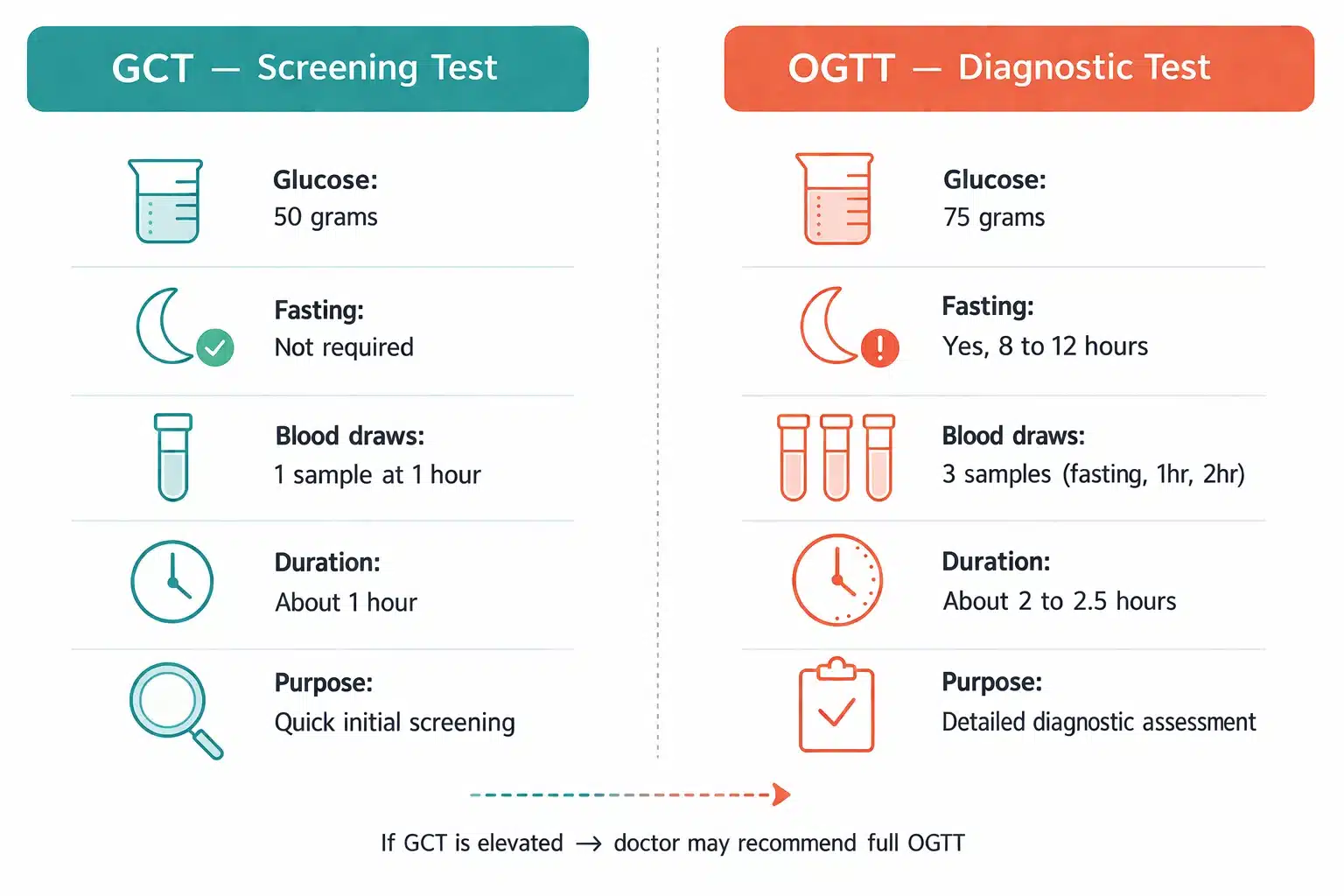
The GCT (Glucose Challenge Test) is a shorter screening test. You drink a 50-gram glucose solution, and a single blood sample is taken after one hour. You do not need to fast beforehand. If the result is above a certain threshold, your doctor may then recommend the full OGTT for confirmation.
The OGTT is more detailed. It requires overnight fasting and involves drinking a 75-gram glucose solution followed by blood draws at specific time points. This is the test that can help assess whether gestational diabetes is present.
In Pakistan, many doctors now prefer to go directly to the 75g OGTT for a more thorough evaluation, especially when risk factors are present.
When Doctors Recommend the OGTT Test in Pregnancy
Most pregnant women are screened for gestational diabetes between 24 and 28 weeks. However, your doctor may recommend the OGTT test in pregnancy earlier if you have certain risk factors.
These can include a family history of diabetes, a previous pregnancy affected by gestational diabetes, being above a certain body weight, or a history of delivering a large baby. Age and certain ethnic backgrounds may also play a role in the decision.
Your doctor is the best person to decide when this test is appropriate for you. Not every woman will need early screening, but those who do benefit from it greatly.
How to Prepare for the OGTT
Proper preparation is essential to get accurate results. Here is what you need to do before the test.
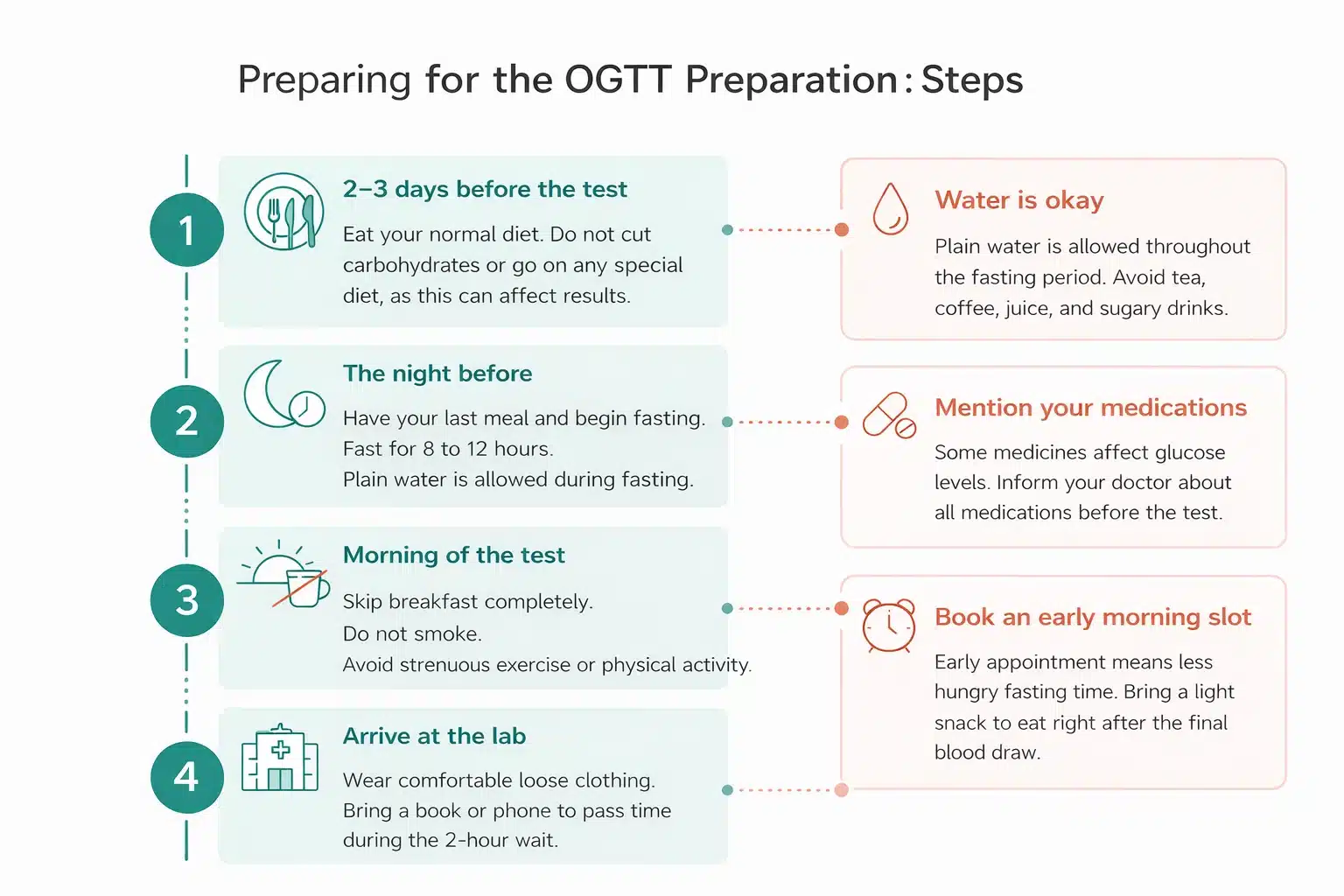
- Eat normally for the two to three days before the test. Do not go on a special diet or cut carbohydrates drastically, as this can affect your results.
- Fast for 8 to 12 hours before the test. This usually means having your last meal the night before and skipping breakfast. Water is allowed during the fasting period.
- Avoid smoking and strenuous exercise on the morning of the test, as both can influence blood sugar levels.
- Wear comfortable clothing and bring something to read or do, since the test takes a couple of hours.
If you are on any medication, let your doctor know beforehand. Some medicines can affect glucose metabolism, and your doctor may advise you on how to manage them around the test.
What to Expect During the Test
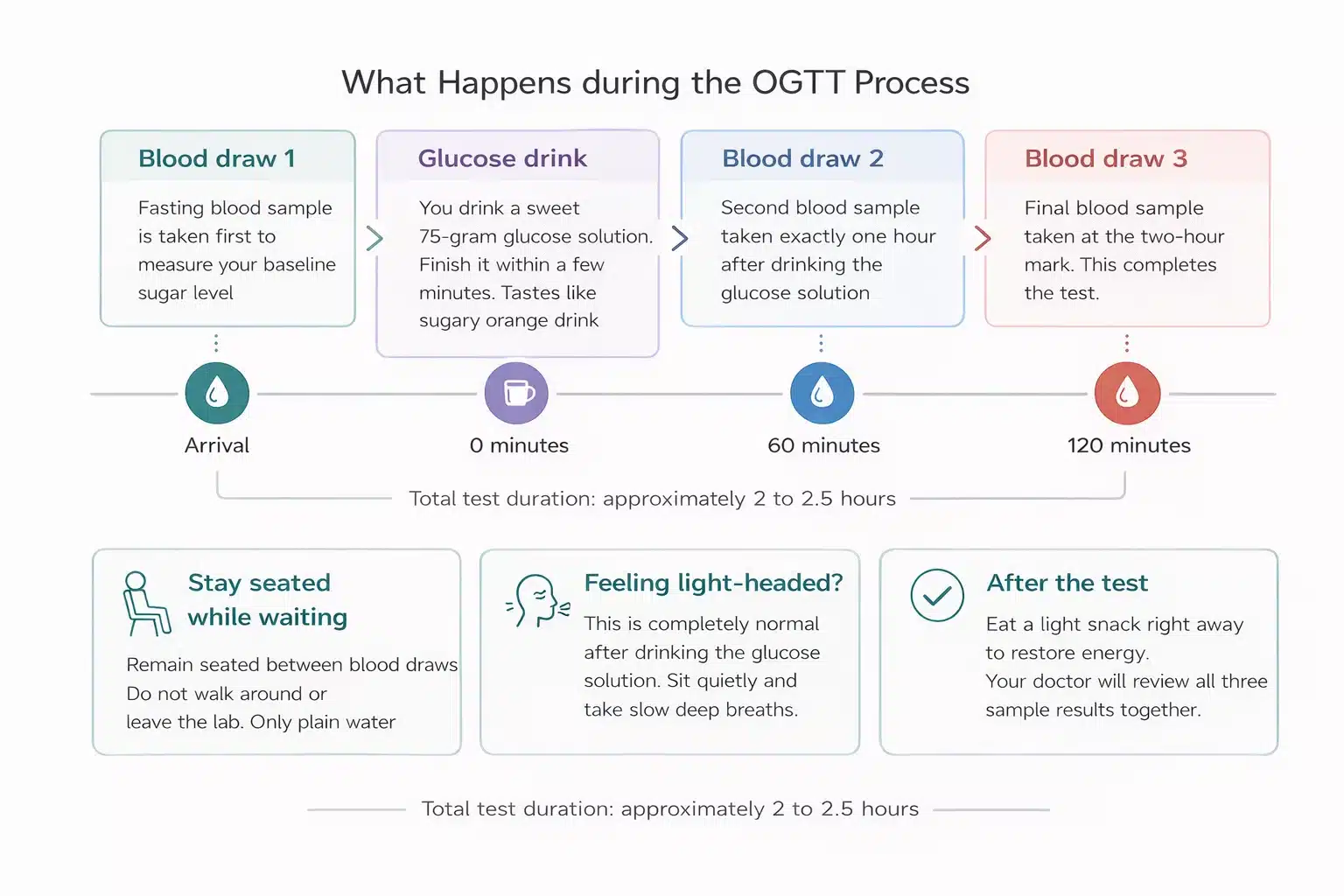
On the day of the test, the process is straightforward. A fasting blood sample is drawn first. This measures your baseline blood sugar level.
Next, you will be given a glucose drink containing 75 grams of glucose. Most people describe the taste as very sweet, similar to a sugary orange or lemon drink. You will need to finish it within a few minutes.
After drinking the solution, you will wait at the lab or collection centre. Blood samples are drawn again at the one-hour mark and the two-hour mark. The entire process usually takes about two to two and a half hours.
During the waiting period, you should remain seated and avoid eating, drinking anything other than water, or walking around excessively. Staying calm and relaxed will help your body process the glucose naturally.
What Results Generally Help Assess
Once the lab processes your samples, your doctor will review the results. The numbers from your fasting, one-hour, and two-hour samples are compared against clinical guidelines to see how your body managed the glucose load.
If any of the values are above expected ranges, it may indicate gestational diabetes. Keep in mind that results are always interpreted by your clinician, and reference ranges can vary by guideline and by lab. A single elevated reading does not always mean a diagnosis.
Your doctor may recommend dietary changes, lifestyle adjustments, or further monitoring depending on the results. The goal is always to manage blood sugar levels for a healthy pregnancy and delivery.
Related Tests You May Hear About
During pregnancy, your doctor might also mention a couple of other tests related to blood sugar.
Plasma Glucose (Fasting) is a simpler test that measures your blood sugar after an overnight fast. It does not involve drinking a glucose solution. While it can be helpful in certain situations, it does not give the full picture that an OGTT provides.
Glycosylated Hemoglobin (HbA1c) measures your average blood sugar over the past two to three months. It is commonly used for monitoring diabetes but is not always the primary tool for diagnosing gestational diabetes. Your doctor may order it alongside the OGTT if they want a broader view of your sugar control.
Common Mistakes and Tips
One of the most common mistakes is not fasting properly before the test. Even a small snack or a cup of tea with sugar can affect your results and may require you to repeat the test on another day.
Another frequent issue is leaving the lab during the waiting period. Moving around too much or going for a walk between blood draws can change how your body processes glucose, leading to inaccurate readings.
A helpful tip is to schedule your appointment early in the morning. Since you need to fast overnight, an early slot means less time spent hungry. Bringing a light snack to eat after the final blood draw is also a good idea, so you can refuel right away.
Finally, do not panic if you feel a little light-headed or nauseous after drinking the glucose solution. This is normal for some women. Sitting quietly and taking slow, deep breaths usually helps.
Frequently Asked Questions
Do I need to fast before an OGTT in pregnancy?
Yes, fasting for 8 to 12 hours is required before the OGTT. You can drink plain water during this time, but avoid food, tea, coffee, and sugary drinks.
How long does the test take?
The entire process takes about two to two and a half hours. This includes the fasting blood draw, drinking the glucose solution, and two additional blood draws at one hour and two hours.
What is the difference between GCT and OGTT?
The GCT is a shorter screening test using 50 grams of glucose with no fasting required. The OGTT is a more detailed test using 75 grams of glucose with fasting, providing a fuller assessment. If a GCT result is elevated, your doctor may follow up with the OGTT.
Can I drink water during the test?
Yes, plain water is generally allowed during the fasting period and while waiting between blood draws. Avoid flavoured water, juice, tea, or any other beverage.
Should I do HbA1c or OGTT in pregnancy?
The OGTT is the standard test used to screen for gestational diabetes during pregnancy. HbA1c may be used as an additional tool but is not a replacement for the OGTT. Your doctor will advise which tests are right for your situation.
Book Your OGTT Today
If your doctor has recommended an OGTT during pregnancy, you can book the GTT / GCT (75 Grams Glucose Tolerance Test (for Pregnant Patient) (Fasting, 75gm Glucose 1 Hours, 2 Hours) through Chughtai Lab. Home sampling is also available for your comfort and convenience. Talk to your doctor, then schedule your test so you can stay informed and at ease throughout your pregnancy.



