
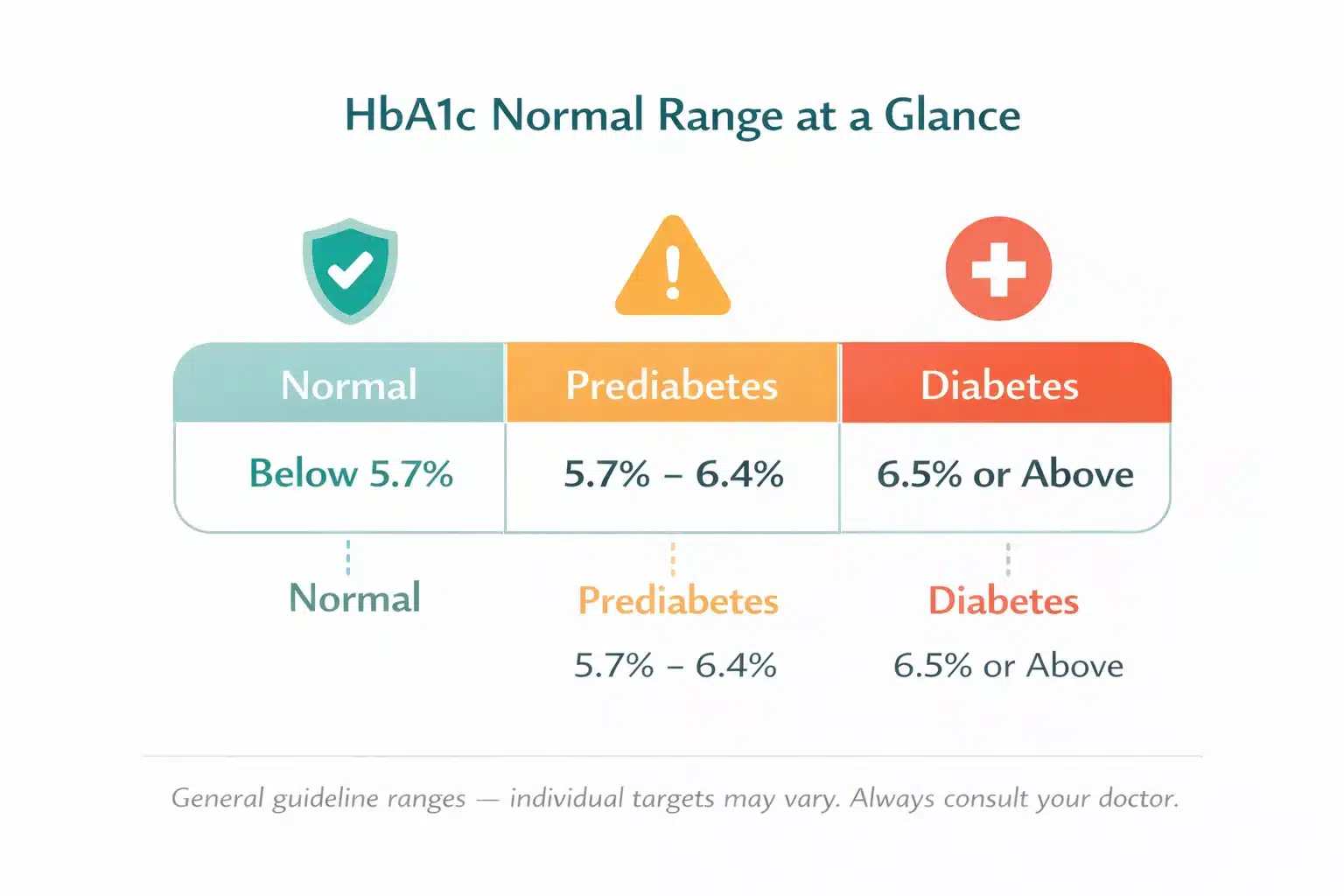
The HbA1c normal range is generally below 5.7%. A result between 5.7% and 6.4% may point towards prediabetes, while 6.5% or above may indicate diabetes. These are widely used guideline categories, but your doctor should always interpret your specific result based on your overall health.
What Does an HbA1c Test Measure?
HbA1c — also called glycosylated haemoglobin — measures the percentage of your red blood cells that have glucose attached to them. Because red blood cells live for roughly two to three months, the test gives a picture of your average blood sugar levels over that period.
Unlike a single glucose reading that captures one moment, HbA1c reflects how well blood sugar has been controlled over a longer window. This is why doctors often use the Glycosylated Hemoglobin (HbA1c) test as a key tool for screening and monitoring.
HbA1c Normal Range Explained
Major diabetes guidelines, including those from the American Diabetes Association, group HbA1c results into three general categories. The table below shows these commonly referenced ranges.
| Category | HbA1c Range | What It May Suggest |
| Normal | Below 5.7% | Blood sugar is generally well controlled |
| Prediabetes | 5.7% – 6.4% | Higher-than-normal sugar; increased risk of diabetes |
| Diabetes | 6.5% or above | May indicate diabetes; confirmation needed |
Important: These ranges are general guideline categories. Individual targets can differ based on factors such as age, pregnancy, haemoglobin disorders, anaemia, chronic kidney disease, or recent blood loss. Always consult your doctor for personalized interpretation.
Prediabetes vs Diabetes: What Your Results May Mean
A prediabetes test result — an HbA1c between 5.7% and 6.4% — does not mean you have diabetes. It means your blood sugar levels are higher than normal and there may be an increased risk of developing type 2 diabetes over time. Many people with prediabetes can slow or even reverse this trend through lifestyle adjustments such as dietary changes and regular physical activity.
An HbA1c of 6.5% or above may indicate diabetes, but a diabetes diagnosis is usually not made from a single test. Your doctor may recommend a repeat HbA1c or additional tests before reaching a conclusion. A1c levels can vary slightly between labs and testing methods, so clinical judgement remains essential.
When Do Doctors Use the HbA1c Test?
Doctors may order an HbA1c test in two main situations.
Screening: If you are over 35, have a family history of diabetes, are overweight, or have other risk factors, your doctor may suggest an HbA1c test to check for prediabetes or diabetes — even if you feel perfectly fine.
Monitoring: For people who have already been diagnosed with diabetes, HbA1c can help assess how well blood sugar has been managed over recent months. This guides your doctor in adjusting your care plan if needed.
When HbA1c May Be Less Reliable
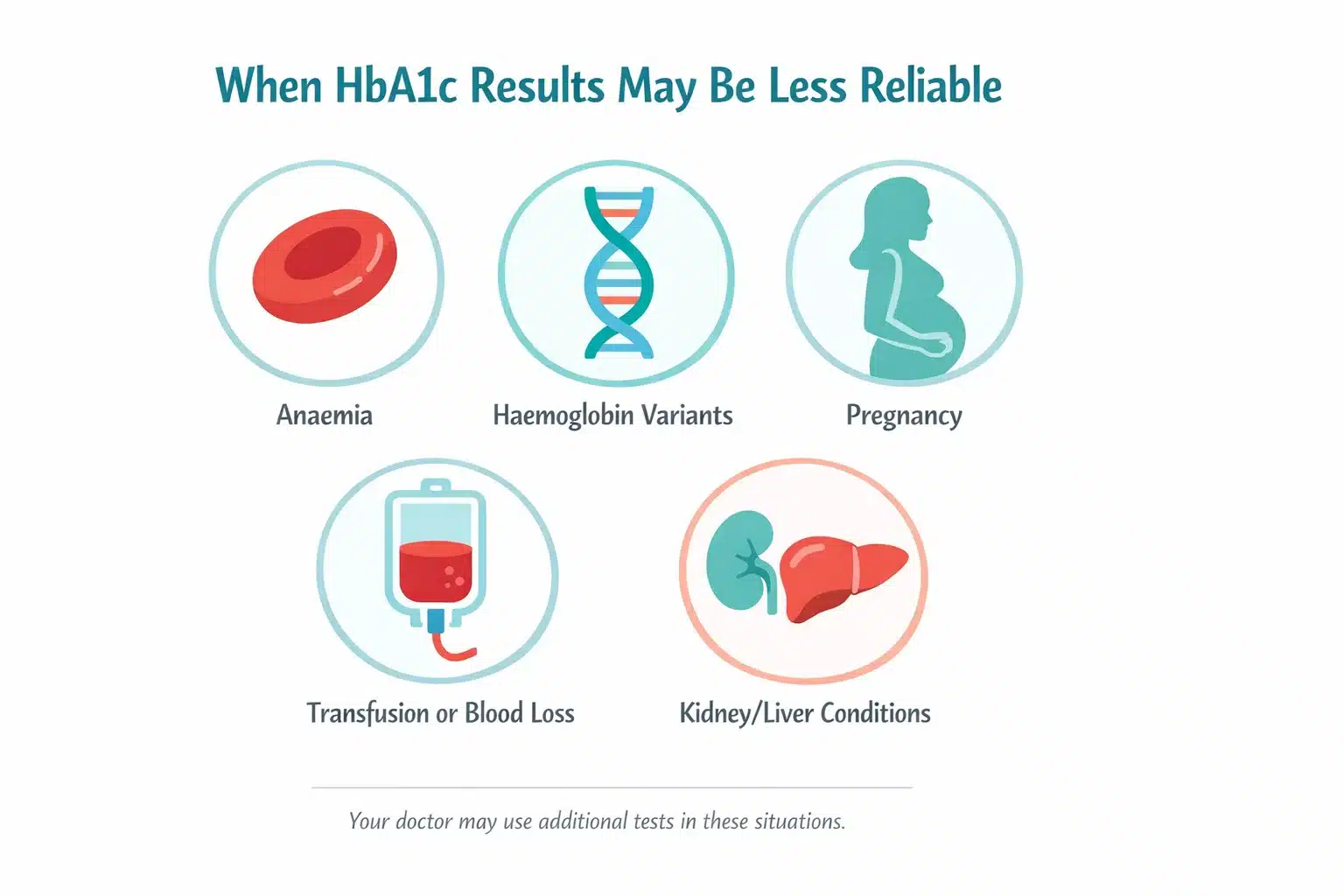
While HbA1c is a valuable tool, certain conditions can affect its accuracy. Your doctor may interpret results with extra care or choose alternative tests if you have any of the following:
- Iron-deficiency anaemia or other types of anaemia
- Haemoglobin variants (such as sickle cell trait or thalassaemia, which are relatively common in Pakistan)
- Pregnancy
- Recent blood transfusion or significant blood loss
- Some kidney or liver conditions
In these cases, your doctor may rely more heavily on direct glucose measurements to guide decisions.
How HbA1c Compares to Glucose Tests
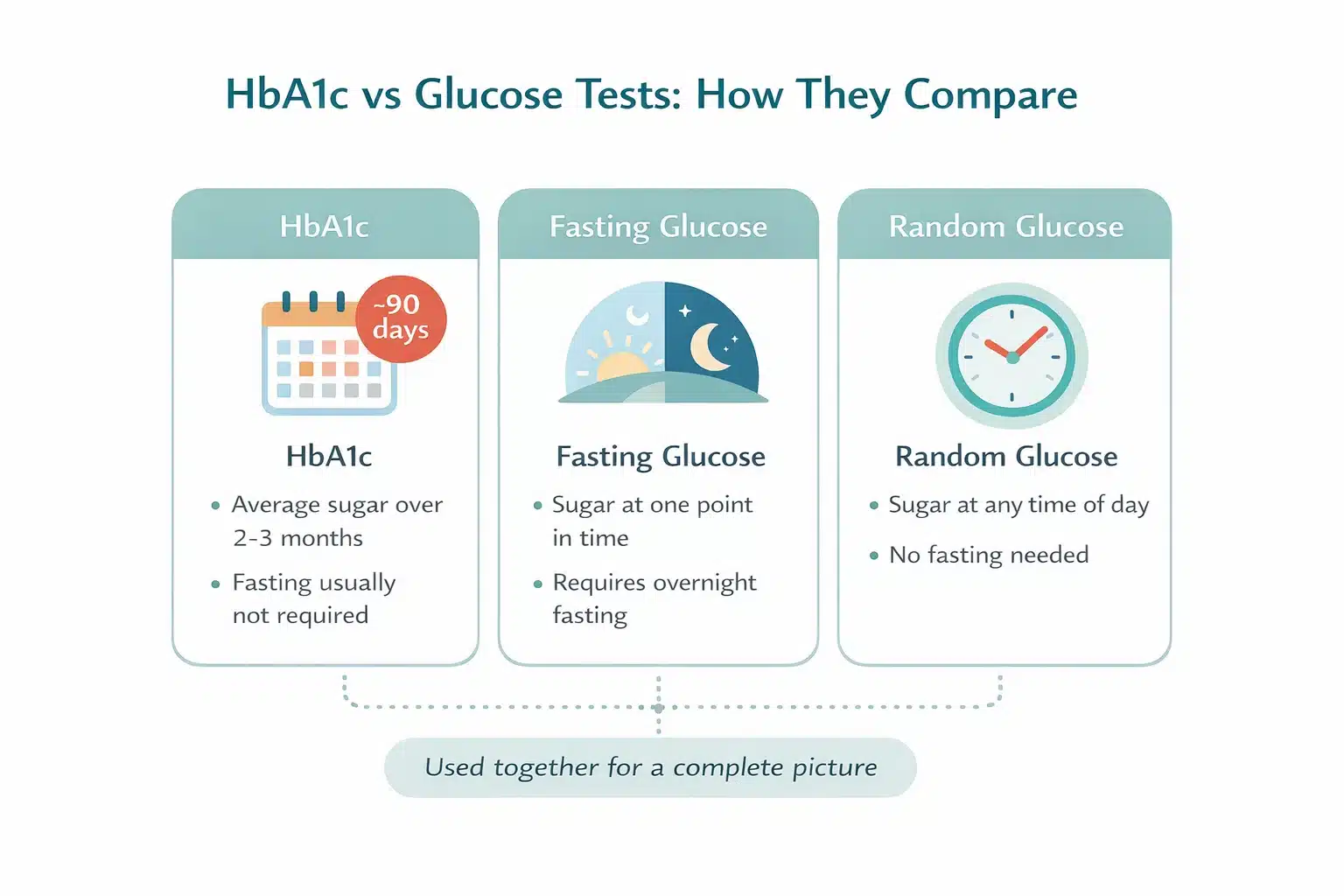
HbA1c and glucose tests measure different things, and they work best when used together.
A Plasma Glucose (Fasting) test measures your blood sugar after an overnight fast and gives a snapshot of your glucose level at that specific moment. A Plasma Glucose (Random) test can be done at any time without preparation and is often used when symptoms of very high sugar are present.
HbA1c, on the other hand, reflects your average sugar control over two to three months. Your doctor may order one or more of these tests depending on the clinical picture. They complement each other and provide a fuller understanding of your metabolic health.
Preparation and Common Questions About the Test
One of the most common points of confusion is whether fasting is needed before an HbA1c test. In most cases, HbA1c does not require fasting, which makes it a convenient option. You can usually have the test done at any time of day, regardless of when you last ate.
However, if your doctor has ordered additional tests alongside HbA1c — such as a fasting glucose test — you may need to fast for those. Always follow the specific instructions your healthcare provider gives you.
Related Tests
If your doctor is evaluating your blood sugar or diabetes risk, they may recommend one or more of the following alongside your HbA1c:
- Glycosylated Hemoglobin (HbA1c) — the primary test for long-term blood sugar monitoring
- Plasma Glucose (Fasting) — a fasting blood sugar check used for diagnosis and monitoring
- Plasma Glucose (Random) — a non-fasting glucose check, helpful when immediate results are needed
Frequently Asked Questions
What is a normal HbA1c?
A normal HbA1c is generally considered to be below 5.7%. This suggests that your average blood sugar levels over the past two to three months have been within a healthy range. Keep in mind that individual targets may differ, so discuss your result with your doctor.
What is the prediabetes HbA1c range?
The prediabetes range is typically between 5.7% and 6.4%. A result in this range may indicate that blood sugar levels are higher than normal but have not yet reached the threshold for diabetes.
Does HbA1c require fasting?
No. In most cases, the HbA1c test does not require fasting. This is one of its practical advantages. However, if your doctor has ordered other blood tests at the same time, fasting may still be needed for those.
Why can HbA1c be inaccurate sometimes?
Certain conditions can affect HbA1c results. These include anaemia, haemoglobin variants (such as thalassaemia), recent blood transfusions, pregnancy, and some kidney or liver conditions. If any of these apply to you, your doctor may use other tests to confirm your blood sugar status.
Should I do HbA1c or fasting glucose?
Both tests are useful, and your doctor may recommend one or both depending on your situation. HbA1c gives a longer-term picture of blood sugar control, while fasting glucose provides a point-in-time reading. Together, they offer a more complete view. Your doctor is the best person to advise which test is most appropriate for you.
Take the Next Step
| Understanding your blood sugar starts with the right test. If you or your doctor would like to check your long-term glucose levels, you can book your Glycosylated Hemoglobin (HbA1c) test through Chughtai Lab. You can also pair it with a Plasma Glucose (Fasting) test for a more complete picture. Convenient home sampling is available across Pakistan. |




