
If you’re wondering about HbA1c vs fasting blood sugar, here’s the short version: HbA1c reflects your average blood sugar over the past two to three months, while fasting blood sugar shows your glucose level at one specific point in time. Both are valuable, but they answer different questions. Your doctor will decide which one suits your situation best—and in many cases, both may be recommended together.
Why HbA1c and Fasting Sugar Are Often Confused
Both tests are used to assess blood sugar levels, so it’s easy to assume they do the same thing. Many people hear the word “sugar test” and picture a single number that tells them everything. In reality, these are two different blood sugar tests that look at glucose in very different ways.
The confusion often grows when someone gets one result that looks normal but the other comes back borderline. This doesn’t necessarily mean something is wrong—it just shows that each test captures a different part of the picture. Understanding these differences can help you have a more informed conversation with your doctor.
What HbA1c Measures
HbA1c—short for glycosylated haemoglobin—measures the percentage of haemoglobin in your red blood cells that has glucose attached to it. Because red blood cells live for roughly two to three months, this test provides a window into your average blood sugar control over that period.
Think of it this way: if fasting blood sugar is like checking the weather right now, HbA1c is more like looking at the season’s average temperature. One reading on a single morning won’t change your HbA1c result, which makes it especially useful for tracking long-term trends.
The Glycosylated Hemoglobin (HbA1c) test does not require fasting, which makes it convenient for many patients. However, certain conditions—like anaemia or haemoglobin disorders—can sometimes affect the result, so doctors always interpret it alongside your overall health picture.
What Fasting Blood Sugar Measures
Fasting blood sugar, also called fasting plasma glucose, measures your blood glucose level after you haven’t eaten for at least 8 to 12 hours—typically overnight. It shows how well your body manages glucose when there’s no recent food influencing the number.
This test is one of the most commonly ordered diabetes tests in Pakistan. The Plasma Glucose (Fasting) test is straightforward and widely available. It gives doctors a real-time snapshot of your glucose regulation, which can be particularly useful when screening for diabetes or monitoring known cases.
Because fasting blood sugar can fluctuate from day to day based on stress, sleep, illness, and other factors, a single result is rarely enough to confirm a diagnosis on its own. Your doctor may ask you to repeat it or combine it with other tests before drawing conclusions.
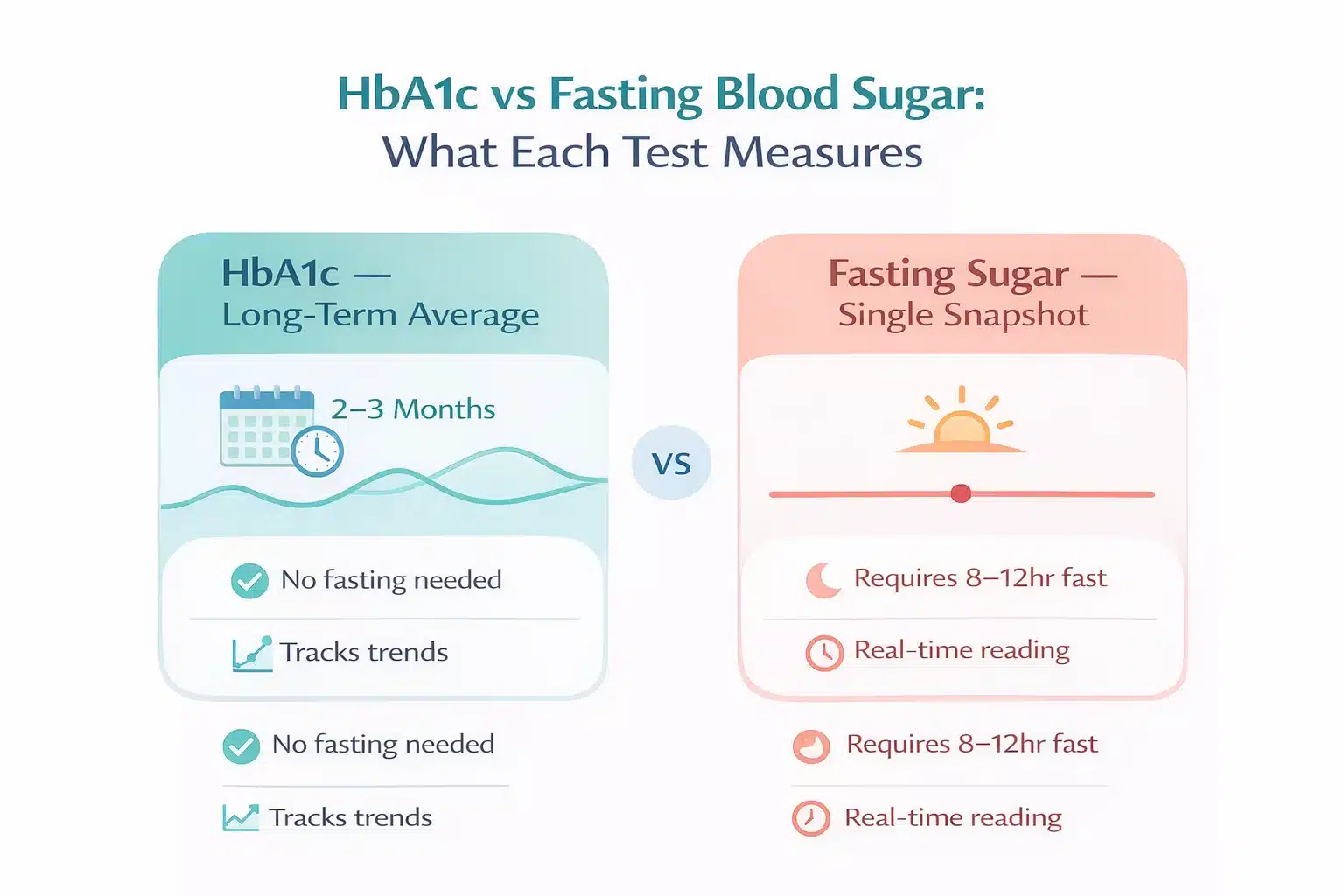
HbA1c vs Fasting Blood Sugar: Key Differences
Here is a side-by-side look at how these two tests compare:
Feature |
HbA1c |
Fasting Blood Sugar |
| What it measures | Average blood sugar over 2–3 months | Blood sugar at a single point (after fasting) |
| Fasting required? | No | Yes (8–12 hours) |
| Time frame | Long-term overview | Real-time snapshot |
| Affected by daily changes? | Less affected | Can vary day to day |
| Best for | Monitoring overall control | Screening and quick checks |
| Conditions that may affect results | Anaemia, haemoglobin disorders | Stress, illness, sleep, recent meals |
As you can see, neither test is “better” in absolute terms. They serve different purposes, and the right choice depends on what your doctor is trying to learn about your health.
Which Test Doctors May Recommend First
There is no single rule about which diabetes test comes first—it depends on your symptoms, risk factors, and medical history. However, there are some common patterns worth knowing.
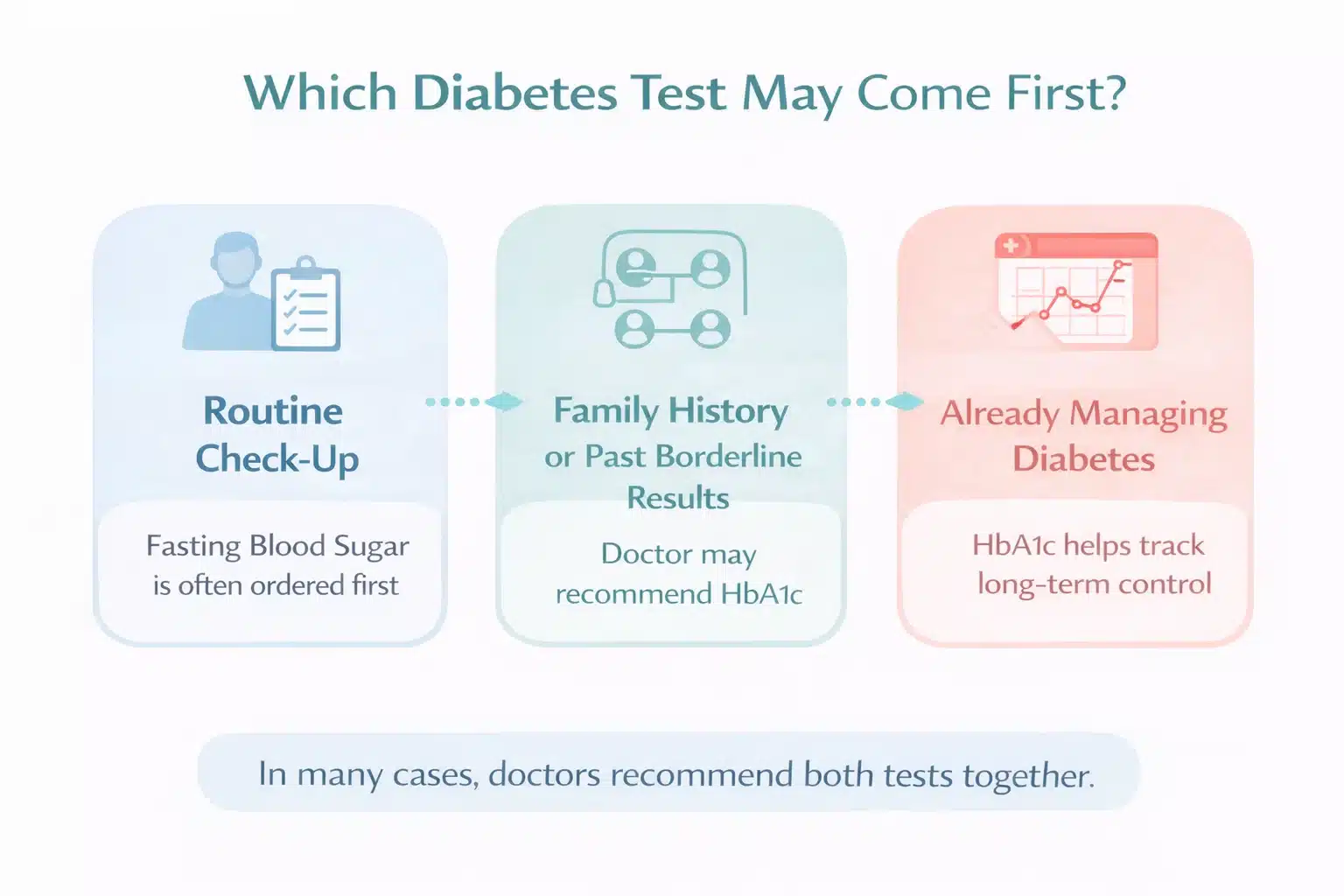
If you’re visiting a doctor for a routine health check-up with no specific symptoms, fasting blood sugar is often the first test ordered because it is quick, affordable, and easy to understand. It can give a useful early signal about how your body is handling glucose.
If there’s a family history of diabetes, if you’ve had borderline results in the past, or if your doctor wants a broader picture of your blood sugar control, they may recommend an HbA1c test either alongside or instead of fasting glucose. HbA1c is especially helpful when a doctor wants to understand trends rather than a single-day reading.
For people already managing diabetes, doctors frequently rely on HbA1c to track how well a treatment plan is working over time. This doesn’t replace fasting blood sugar checks, but it adds a valuable layer of information that a single morning reading cannot provide.
In many cases, doctors recommend both tests together. When you compare HbA1c vs fasting blood sugar results side by side, they can reveal things that either test alone might miss.
Where Random Glucose Fits In
You may also hear about the Plasma Glucose (Random) test, which measures blood sugar at any time of day without fasting. This test can be useful in urgent or emergency situations—for instance, if someone is showing symptoms like excessive thirst, frequent urination, or unexplained fatigue, and the doctor needs a quick reading.
A random glucose result, on its own, does not confirm or rule out diabetes. However, if the value is significantly elevated, it may prompt your doctor to order more specific tests like fasting blood sugar or HbA1c for confirmation. Think of it as a helpful first alert rather than a final answer.
Common Mistakes and Preparation Tips
One of the most common mistakes people make is assuming that all blood sugar tests require fasting. This is only true for fasting blood sugar. HbA1c and random glucose do not require you to skip meals beforehand. Showing up fasted for an HbA1c test won’t hurt, but it’s simply not necessary.
Another frequent issue is comparing results from one test type to the other as if they’re interchangeable. A “normal” fasting sugar does not automatically mean your HbA1c will also be within the expected range, and vice versa. The two tests measure different things, and their reference ranges are not directly equivalent. Keep in mind that ranges may vary by lab and clinical context, so always discuss results with your doctor.
Timing can also matter. If you’re taking a fasting blood sugar test, make sure you’ve truly fasted for the recommended period. Drinking sugary beverages, chai with sugar, or snacking late at night can affect the result. Plain water is generally fine during the fasting window.
Finally, avoid making changes to your medication or routine based on a single test result without speaking to your doctor. Blood sugar tests are tools that help guide medical decisions—they’re not diagnoses by themselves. Your doctor will always interpret results alongside your symptoms, history, and overall health.
Related Tests to Discuss with Your Doctor
If your doctor is evaluating your blood sugar health, the following tests may come up in conversation: the Glycosylated Hemoglobin (HbA1c) test for long-term glucose monitoring, the Plasma Glucose (Fasting) test for a fasting snapshot, and the Plasma Glucose (Random) test for quick, non-fasting checks. Your doctor may recommend one or more based on your individual needs.
Frequently Asked Questions
Can I take HbA1c and fasting blood sugar on the same day?
Yes. Since HbA1c does not require fasting, you can have both tests done during a single visit. Many doctors recommend this combination to get both a long-term and real-time view of your blood sugar levels.
Is one test more accurate than the other?
Neither test is more accurate—they simply measure different things. HbA1c gives a broader picture over months, while fasting blood sugar reflects your glucose at one specific moment. Both have their strengths, and accuracy depends on proper preparation and individual health factors.
My fasting sugar is normal but my HbA1c is borderline. What does that mean?
This can happen and does not necessarily mean there’s a problem. It may suggest that your blood sugar rises at other times during the day that a fasting test would miss. Your doctor can help you understand what this means in your specific case and whether any follow-up is needed.
Do I need to fast before an HbA1c test?
No. HbA1c does not require fasting. You can eat and drink normally before taking this test. Fasting is only required for a fasting blood sugar test.
How often should I get these tests done?
This depends on your risk factors and your doctor’s advice. For people managing diabetes, HbA1c is typically recommended every few months. For general screening, your doctor may suggest annual or periodic testing based on your age, family history, and overall health.
Take the Next Step for Your Health
If your doctor has recommended blood sugar testing—or you’d like to be proactive about your health—Chughtai Lab offers convenient, reliable testing across Pakistan. You can book a Glycosylated Hemoglobin (HbA1c) test along with a Plasma Glucose (Fasting) test to get a complete picture of your blood sugar health. Walk into any Chughtai Lab branch or book a home sample collection to get started.




