
Both vitamin B12 and folate (vitamin B9) are essential for healthy blood cells and nerve function. When either one is low, you can feel exhausted, weak, or unwell, and the symptoms often overlap. A simple vitamin B12 test or a folate test can help your doctor figure out which deficiency is behind your symptoms and guide the right course of action.
Why B12 and Folate Deficiency Are Easy to Confuse
Vitamin B12 and folate work closely together in the body. They are both needed to produce red blood cells and support DNA synthesis. Because their roles overlap, a shortage of either vitamin can lead to a similar type of anaemia called megaloblastic anemia, where red blood cells become abnormally large and cannot function properly.
This overlap is exactly why many people, and even some healthcare providers, initially find it difficult to tell the two deficiencies apart based on symptoms alone. The good news is that targeted blood tests make it much easier to identify which vitamin is low, so the right steps can be taken.
Vitamin B12 Deficiency: Key Symptoms and Common Causes
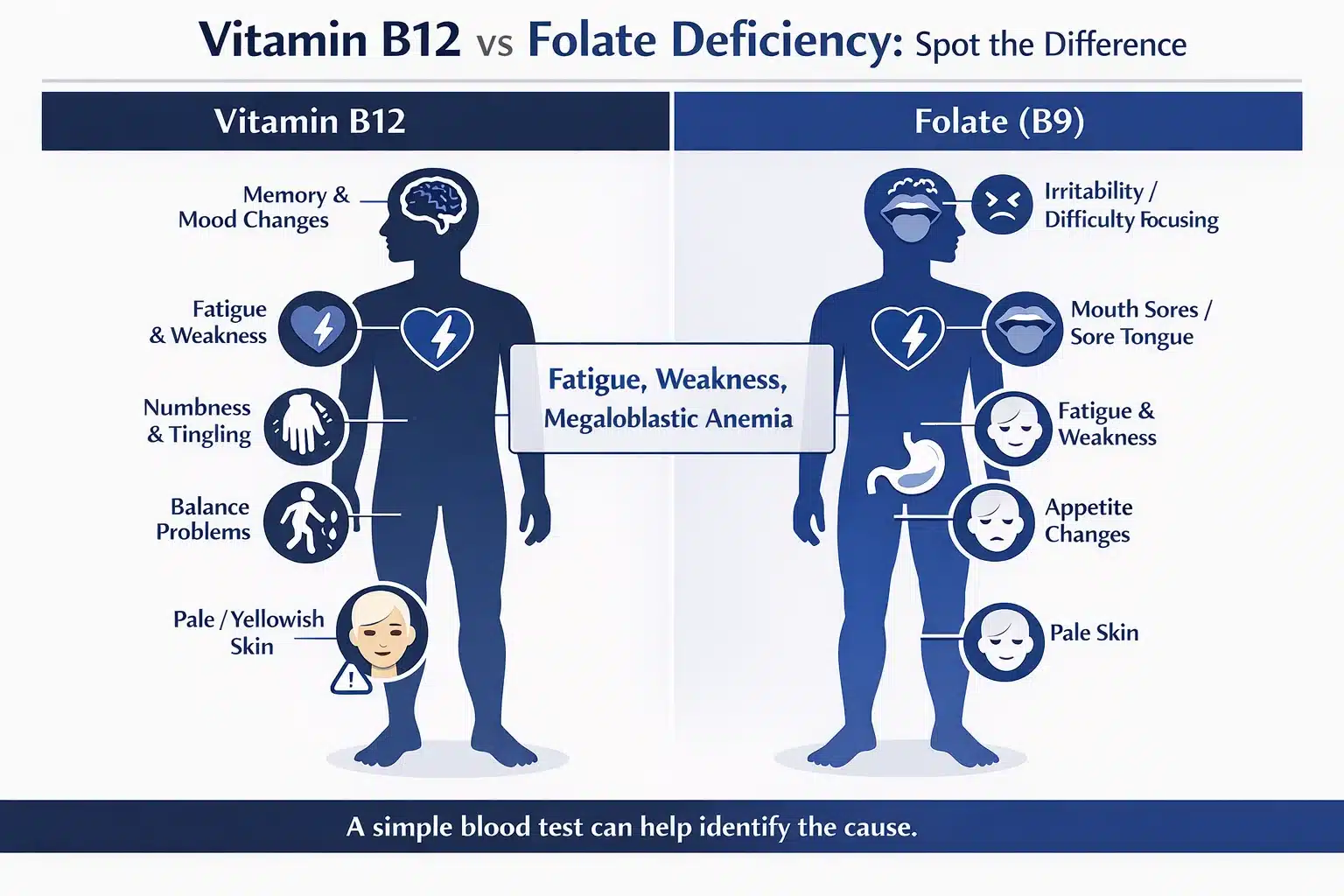
Vitamin B12 plays a critical role in nerve health, red blood cell production, and brain function. When your body does not get or absorb enough B12 over time, the effects can show up in several ways.
Symptoms That May Point to Low B12
Fatigue and general weakness are usually the earliest signs. Many people also report feeling lightheaded or short of breath during normal activities. What makes B12 deficiency stand out, however, is its effect on the nervous system. Numbness and tingling in the hands and feet, difficulty with balance, and even mood changes such as irritability or low mood can all be associated with B12 deficiency. In more advanced cases, memory problems or difficulty concentrating may develop.
It is worth noting that neurological symptoms like numbness and tingling are far more common with B12 deficiency than with folate deficiency, making this an important clue for doctors.
Common Causes
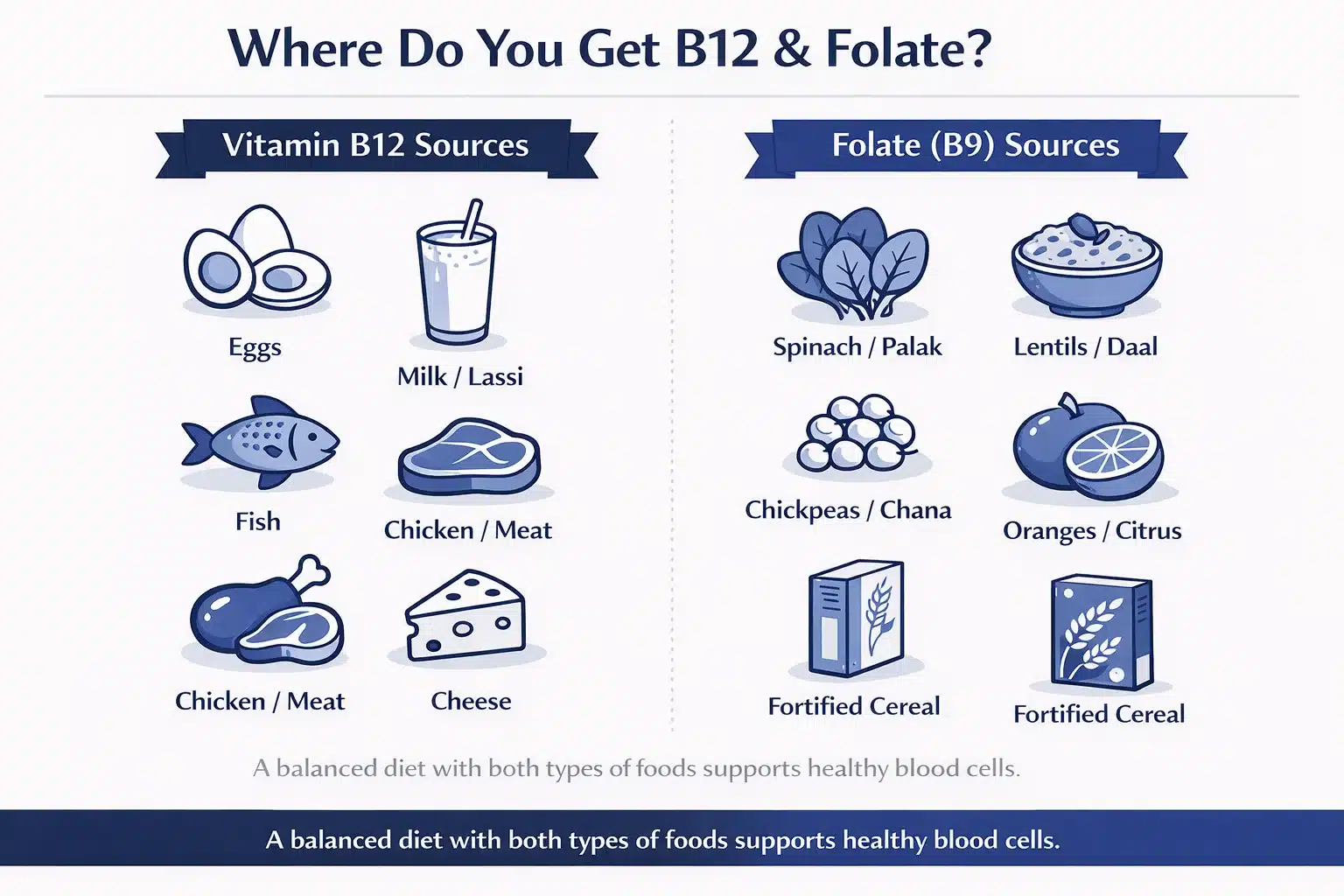
B12 is found mainly in animal-based foods such as meat, eggs, dairy, and fish. People who follow a strict vegetarian or vegan diet may be at higher risk. Absorption issues are another major factor, conditions affecting the stomach or small intestine, certain medications, and age-related changes can all reduce the body’s ability to take in B12 from food. In Pakistan, where dietary patterns vary widely, both limited intake and poor absorption are commonly seen.
Folate Deficiency: Key Symptoms and Common Causes
Folate, also known as vitamin B9, is essential for cell growth, red blood cell formation, and healthy development during pregnancy. Like B12, a folate shortage can lead to anaemia and fatigue, but the pattern of symptoms is somewhat different.
Symptoms That May Point to Low Folate
The most common complaints are persistent tiredness, weakness, and pale skin. Some people experience mouth sores, a sore tongue, or changes in appetite. Unlike B12 deficiency, folate deficiency does not typically cause significant nerve-related symptoms such as numbness or tingling. However, it can affect mood and may contribute to irritability or difficulty focusing.
Folate deficiency is particularly important to identify in women who are pregnant or planning to become pregnant, as low folate levels during early pregnancy can affect foetal development.
Common Causes
Folate is found in green leafy vegetables, lentils (daal), chickpeas, citrus fruits, and fortified cereals. A diet low in these foods is the most common reason for deficiency. Certain medications and medical conditions that affect the gut can also reduce folate absorption. Heavy alcohol consumption is another well-known risk factor.
B12 vs Folate: Key Differences at a Glance
While both deficiencies share several symptoms, there are clear differences that help doctors distinguish between them. The table below summarises the most important distinctions.
Feature |
Vitamin B12 Deficiency |
Folate Deficiency |
| Main dietary sources | Meat, eggs, dairy, fish | Leafy greens, lentils, citrus, fortified cereals |
| Type of anaemia | Megaloblastic anemia | Megaloblastic anemia |
| Neurological symptoms | Common (numbness, tingling, balance issues) | Rare |
| Fatigue and weakness | Yes | Yes |
| Mouth sores / sore tongue | Possible | More common |
| Key risk groups | Vegetarians/vegans, older adults, those with absorption issues | Pregnant women, low-vegetable diets, heavy alcohol use |
| Primary test | Serum Vitamin B12 | Serum Folic Acid (Folate) |
Which Tests Do Doctors Use?
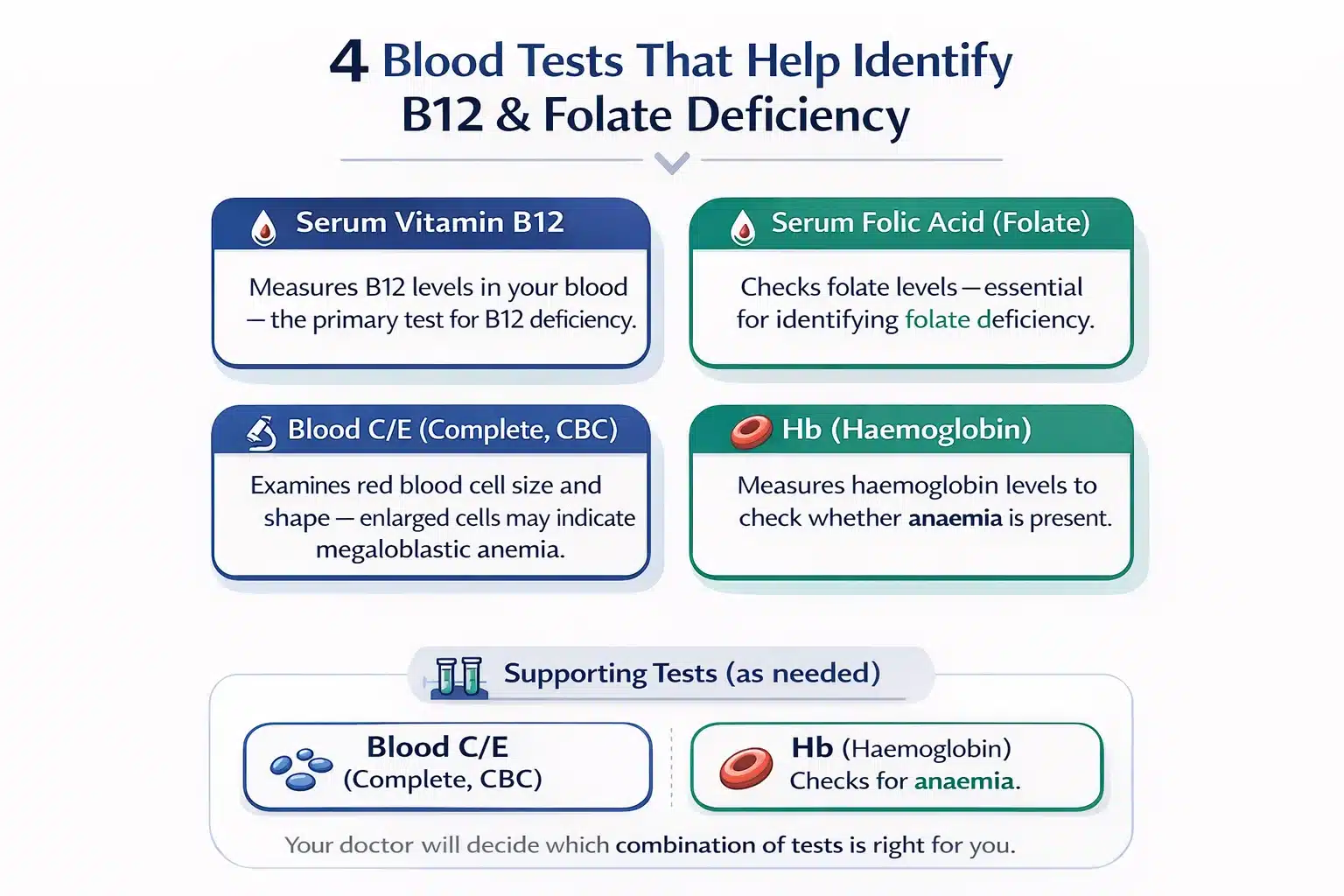
If your doctor suspects a deficiency in either vitamin, they will typically start with a blood test. A Serum Vitamin B12 test measures the level of B12 circulating in your blood and is the standard first step for evaluating possible B12 deficiency. Similarly, a Serum Folic Acid (Folate) test checks your folate levels.
In many cases, your doctor may also request a Blood C/E (Complete, CBC) to look at the size and shape of your red blood cells. Enlarged red blood cells are a hallmark of megaloblastic anemia and can prompt further investigation into B12 or folate levels. An Hb (haemoglobin) test may also be included to assess whether anaemia is present.
Your doctor may order one or several of these tests together, depending on your symptoms and medical history. Taken together, the results can help build a clearer picture of what is going on.
When Might a Doctor Recommend Testing?
Your doctor may recommend a vitamin B12 test or a folate test in a number of situations. Common reasons include:
- Persistent fatigue or weakness that is not explained by other causes
- Numbness, tingling, or unusual sensations in the hands or feet
- Pale or yellowish skin
- A blood test that shows unusually large red blood cells
- Dietary patterns that may increase the risk of deficiency, such as a strict vegetarian or vegan diet
- Pregnancy or planning for pregnancy (folate levels are especially important)
- A known condition that may affect nutrient absorption
Testing is straightforward and only requires a small blood sample. If you have been experiencing any of these signs, it is worth discussing testing options with your doctor.
Test Preparation: What to Keep in Mind
One of the most common questions people have is whether any special preparation is needed before a vitamin B12 test or folate test.
In general, these blood tests do not require strict fasting. However, your doctor or lab may give specific instructions depending on which tests are being run together. It is always a good idea to follow whatever guidance your healthcare provider gives you.
A few practical tips to keep in mind:
- Mention any supplements you are currently taking, as B12 or folate supplements can affect results.
- Let the lab team know about any medications you use regularly.
- Try to stay well-hydrated before your appointment.
- If multiple tests are being drawn at the same time, ask your doctor whether fasting is recommended for any of them.
Keep in mind that reference ranges may vary slightly between laboratories, and your results should always be interpreted by a qualified clinician who understands your full medical context.
Frequently Asked Questions
Can you have both B12 and folate deficiency at the same time?
Yes, it is possible. Since both vitamins come from different food sources and have different absorption pathways, some people may be low in both. Your doctor can check levels of each with separate tests.
Is megaloblastic anemia always caused by B12 or folate deficiency?
B12 and folate deficiency are the most common causes of megaloblastic anemia, but other factors can sometimes play a role. Your doctor may investigate further depending on your overall results.
How long does it take to get results for a vitamin B12 test?
Results are usually available within one to two working days, though this can vary depending on the lab and whether additional tests have been ordered at the same time.
Can diet alone correct a vitamin B12 or folate deficiency?
In mild cases, dietary changes may help improve levels over time. However, if the deficiency is significant or caused by an absorption problem, your doctor may recommend other approaches. Always consult a healthcare professional before making changes.
Should I take B12 or folate supplements on my own?
It is best to get tested first and discuss the results with your doctor. Taking supplements without knowing your actual levels can sometimes mask one deficiency while another goes unnoticed.
Take the Next Step
If you have been experiencing ongoing fatigue, weakness, or numbness and tingling, a simple blood test can help provide answers. You can book a Serum Vitamin B12 test or a Serum Folic Acid (Folate) test through Chughtai Lab, with convenient sample collection options across Pakistan. Talk to your doctor about which test is right for you, and take the first step towards understanding your health better.




