
A renal function test (RFT) is a group of blood tests that check how well your kidneys are working. It typically measures substances like creatinine, urea, and electrolytes. Your doctor may order an RFT as part of a routine checkup or to monitor an existing health condition.
What Are Renal Function Tests (RFT)?
Your kidneys do a lot of heavy lifting behind the scenes. They filter waste from your blood, balance fluids, and help regulate blood pressure. When something goes wrong with kidney function, the effects can ripple across your entire body.
A renal function test is a simple blood panel that gives your doctor a snapshot of how your kidneys are performing. At Chughtai Lab, Renal Function Tests are among the most commonly requested panels because they offer a quick and reliable way to assess kidney health.
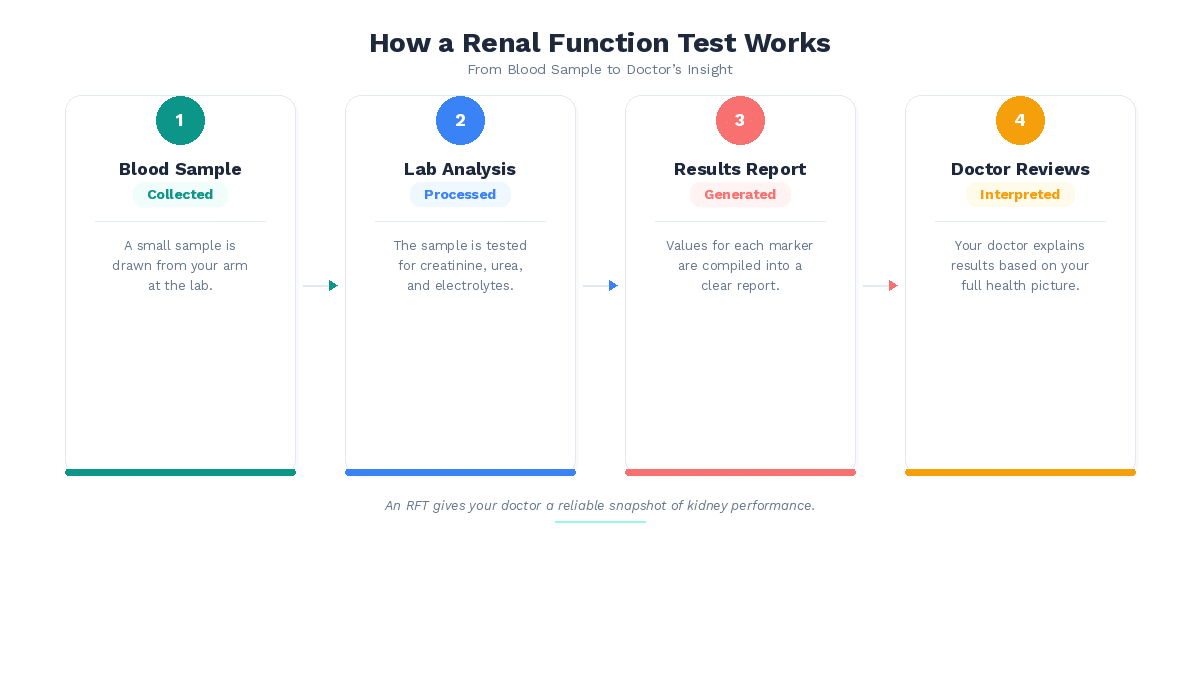
The test itself is straightforward. A small blood sample is drawn, usually from your arm, and sent to the lab for analysis. Results are typically available within a day or so.
What’s Included in an RFT Panel?
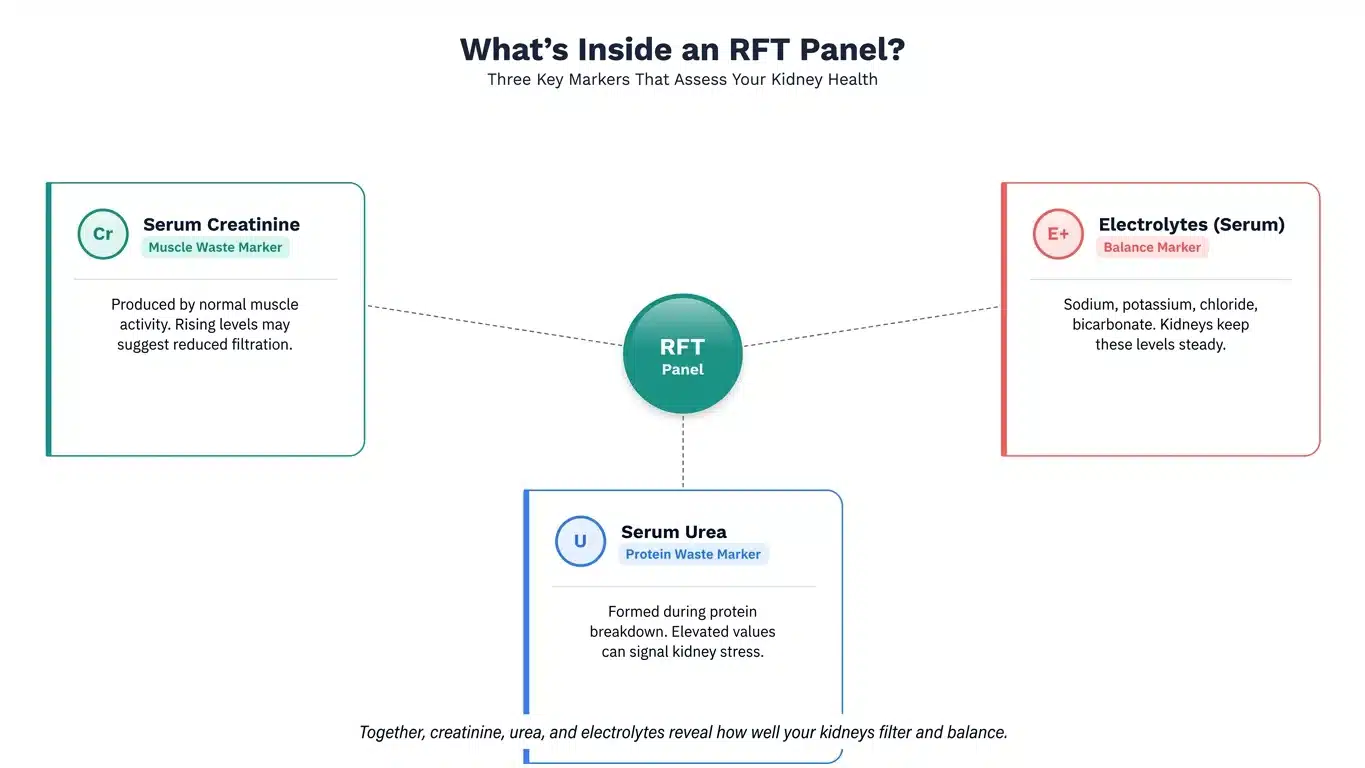
An RFT panel generally includes a handful of key markers. Each one tells a slightly different story about your kidneys.
Serum Creatinine
Creatinine is a waste product that comes from normal muscle activity. Your kidneys are responsible for filtering it out of the blood. When kidney function slows down, creatinine levels in the blood may rise. Serum Creatinine is one of the most widely used markers for evaluating kidney health.
Serum Urea
Urea is another waste product, formed when the body breaks down proteins. Healthy kidneys remove urea efficiently. If levels build up in the blood, it can signal that the kidneys may not be filtering as well as they should. Serum Urea is often measured alongside creatinine for a more complete picture.
Electrolytes (Serum)
Electrolytes like sodium, potassium, chloride, and bicarbonate play vital roles in nerve function, muscle contraction, and fluid balance. The kidneys help keep these levels steady. When kidney function is affected, electrolyte imbalances can occur. Electrolytes (Serum) testing is often part of the RFT panel for this reason.
Together, these markers of creatinine, urea, and electrolytes give doctors meaningful insight into kidney performance.
Why Doctors Order RFT
Doctors recommend a renal function test in many different clinical situations. It is not always a sign that something is wrong. Often, it is simply a precautionary step.
Some common reasons include routine health screenings, especially for adults over 40. Doctors may also order kidney function tests when a patient is managing conditions like diabetes or high blood pressure, both of which can affect the kidneys over time.
If you are taking certain long-term medications, your doctor might use an RFT to make sure those medicines are not putting strain on the kidneys. It can also be ordered before surgery or hospital admission to get a baseline reading.
In some cases, symptoms like unexplained fatigue, swelling in the legs, or changes in urination patterns may prompt a doctor to check kidney health.
Who May Be Advised to Get RFT
While anyone can benefit from a kidney health checkup, certain groups are more commonly advised to get tested.
People living with diabetes or hypertension are often encouraged to have regular kidney monitoring. A family history of kidney disease can also be a reason for periodic testing. Adults over the age of 50 may be advised to include an RFT in their routine blood work.
Patients on medications that may affect the kidneys, such as certain painkillers or blood pressure drugs, may also be asked to get tested from time to time. Your doctor is the best person to decide when and how often you should have this test done.
How to Prepare for an RFT
Preparing for a renal function test is usually quite simple. In many cases, no special preparation is needed.
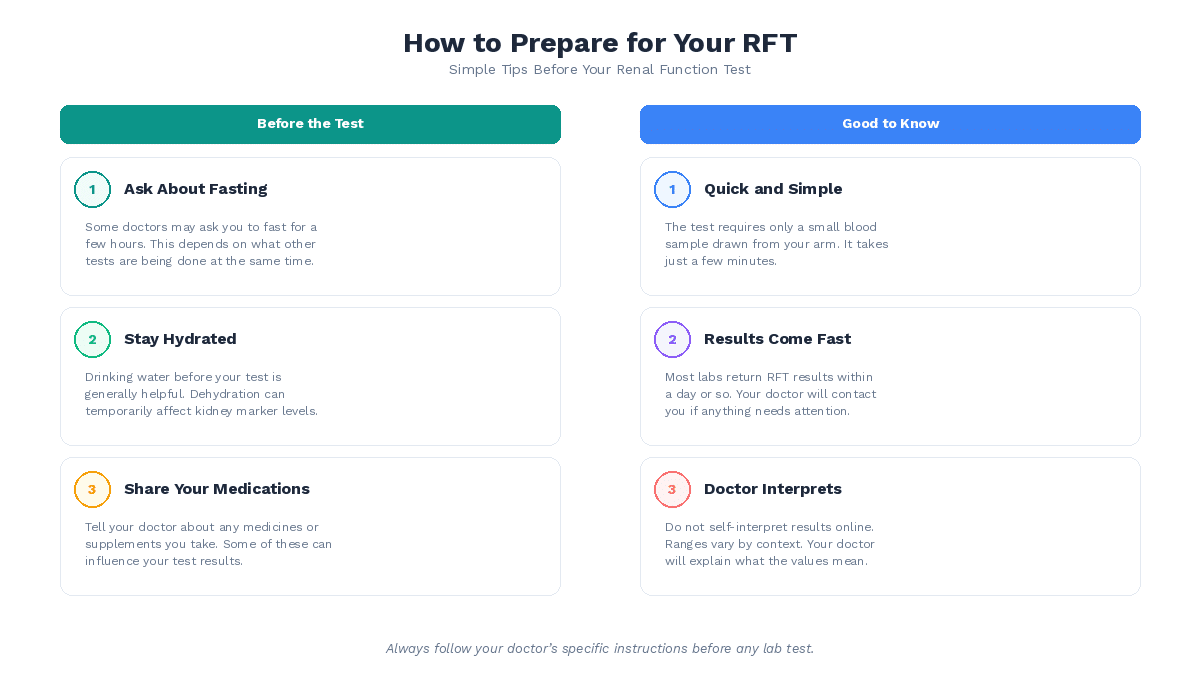
That said, some labs or doctors may ask you to fast for a few hours before the blood draw. This can depend on whether additional tests are being done at the same time. It is always best to follow whatever instructions your doctor or the lab gives you.
Staying well hydrated before the test is generally a good idea. Make sure to inform your doctor about any medications or supplements you are currently taking, as some can influence test results.
How to Understand Your Results
When your results come back, you will see values for each marker tested. It can be tempting to search the internet for what counts as “normal,” but kidney test results depend heavily on context.
Ranges vary by lab and clinical context, and factors like age, gender, muscle mass, and overall health all play a role. A value that looks slightly off on paper may be perfectly fine for your individual situation.
The most important step is to review your results with your doctor. They will consider your full medical history, symptoms, and other test findings before drawing any conclusions. A single test result, on its own, rarely tells the whole story.
Related Kidney Tests
Beyond the standard RFT panel, there are other tests that doctors may recommend depending on the situation. Urine tests, for instance, can provide additional detail about kidney filtration. Imaging studies like an ultrasound might be used to look at the physical structure of the kidneys.
If your doctor wants a focused look at one specific marker, individual tests such as Serum Creatinine, Serum Urea, or Electrolytes (Serum) can be ordered separately. Your doctor will guide you on which combination of tests makes the most sense for your situation.
Frequently Asked Questions
What does an RFT test check?
An RFT checks key markers like creatinine, urea, and electrolytes in your blood. These help your doctor assess how well your kidneys are filtering waste and maintaining fluid balance.
Do I need fasting for an RFT?
Fasting is not always required, but some doctors or labs may recommend it, especially if other blood tests are being done alongside. Always follow the specific instructions given to you.
What’s the difference between creatinine and urea?
Both are waste products filtered by the kidneys, but they come from different sources. Creatinine is produced by muscle metabolism, while urea is formed when the body breaks down dietary protein. Measuring both provides a more complete view of kidney function.
Can dehydration affect kidney test results?
Yes, dehydration can temporarily affect certain kidney markers, potentially making results appear worse than they actually are. Staying hydrated before your test is a good practice.
Should I do RFT alone or with electrolytes?
Many RFT panels already include electrolytes. However, your doctor can advise whether a combined panel or separate tests are more appropriate based on your health needs.
Take the Next Step
If your doctor has recommended a kidney checkup, or if you simply want to stay on top of your health, booking a Renal Function Tests panel is a great place to start. Chughtai Lab makes the process easy, with convenient sample collection and quick turnaround times. Speak with your doctor and get your RFT done today.




