
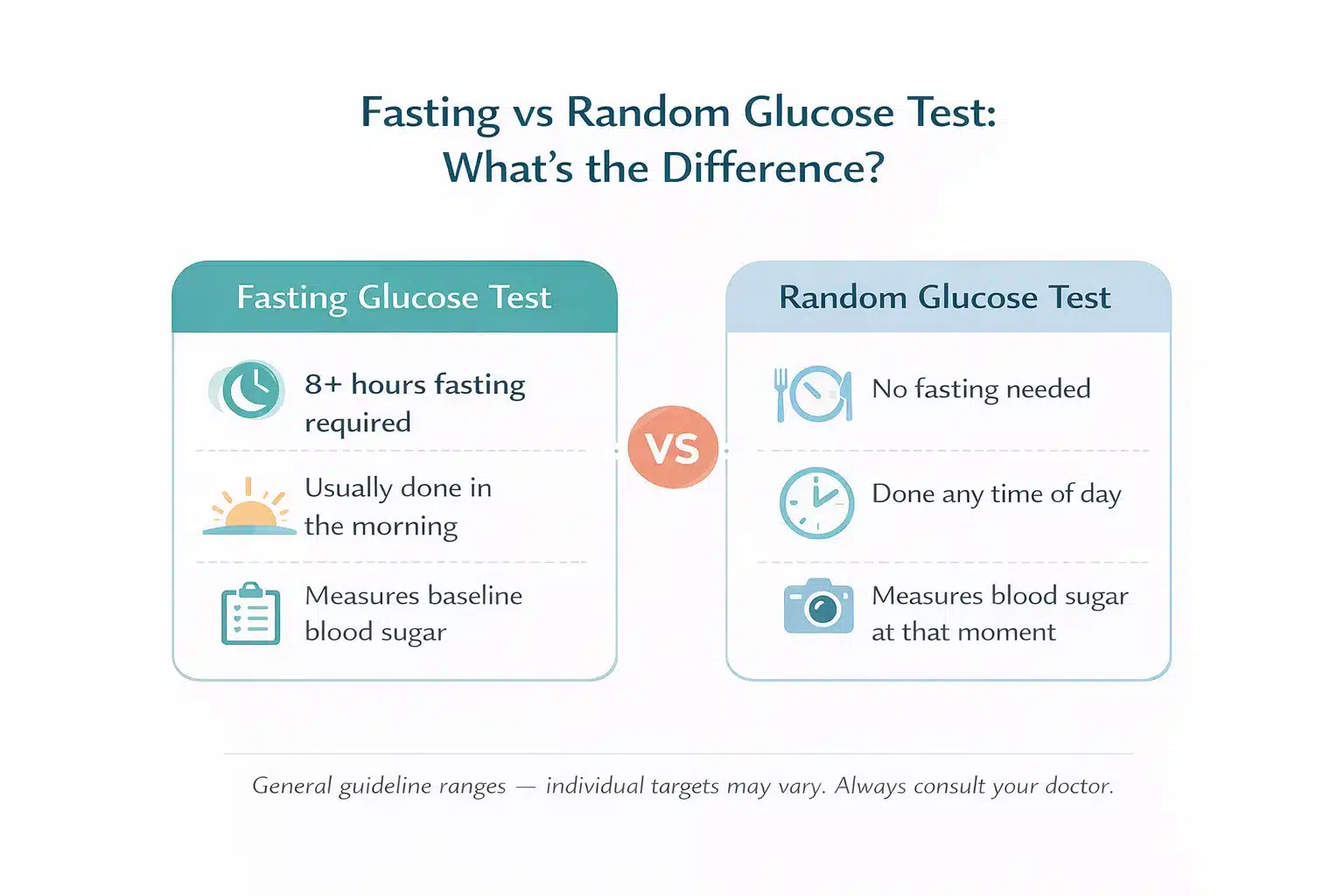
If you’re trying to understand the fasting glucose vs random glucose test comparison, here’s the short version: a fasting glucose test measures your blood sugar after at least 8 hours without food, while a random glucose test checks your levels at any time of the day. Both are useful, but they answer different clinical questions. Your doctor will recommend the one that fits your situation best.
Why Fasting and Random Glucose Tests Are Different
Both tests measure the amount of sugar (glucose) circulating in your blood. The key difference is timing. Your blood sugar naturally rises after eating and then gradually settles back down. Because of this, when your blood is drawn in relation to your last meal makes a real difference in the number that shows up on your report.
A fasting blood sugar test captures your baseline glucose level when your body has had several hours to process everything. A random glucose test reflects whatever is happening at that exact moment, including the effect of a recent meal, physical activity, or even stress. This is why the fasting glucose vs random glucose test distinction matters so much when your doctor is evaluating your results.
What a Fasting Glucose Test Measures
When you fast overnight and have your blood drawn the next morning, the result shows how your body manages glucose without any recent food intake. This baseline reading is widely considered one of the most reliable ways to evaluate blood sugar control.
Healthcare providers often recommend the Plasma Glucose (Fasting) test as part of routine health checkups. It can help assess whether your blood sugar levels fall within a healthy range, and your doctor may use it to screen for conditions like prediabetes or diabetes. Chughtai Lab offers this test as part of its diagnostic services across Pakistan.
Keep in mind that reference ranges may vary by lab and clinical context. Your doctor is the best person to interpret your specific result based on your overall health.
What a Random Glucose Test Measures
A random glucose test, sometimes referred to as a Plasma Glucose (Random) test, measures your blood sugar at any given point during the day. You do not need to fast beforehand, which makes it a convenient option in many healthcare settings.
Doctors may order this type of blood sugar check when a patient shows symptoms such as excessive thirst, frequent urination, or unexplained fatigue. Because fasting is not required, the test is especially useful in urgent or emergency situations where waiting several hours is not practical.
However, since food and activity can influence the result, a random test alone may not provide the full picture. If levels appear elevated, your healthcare provider will likely follow up with a fasting test or additional investigations.
When Doctors May Recommend Each Test
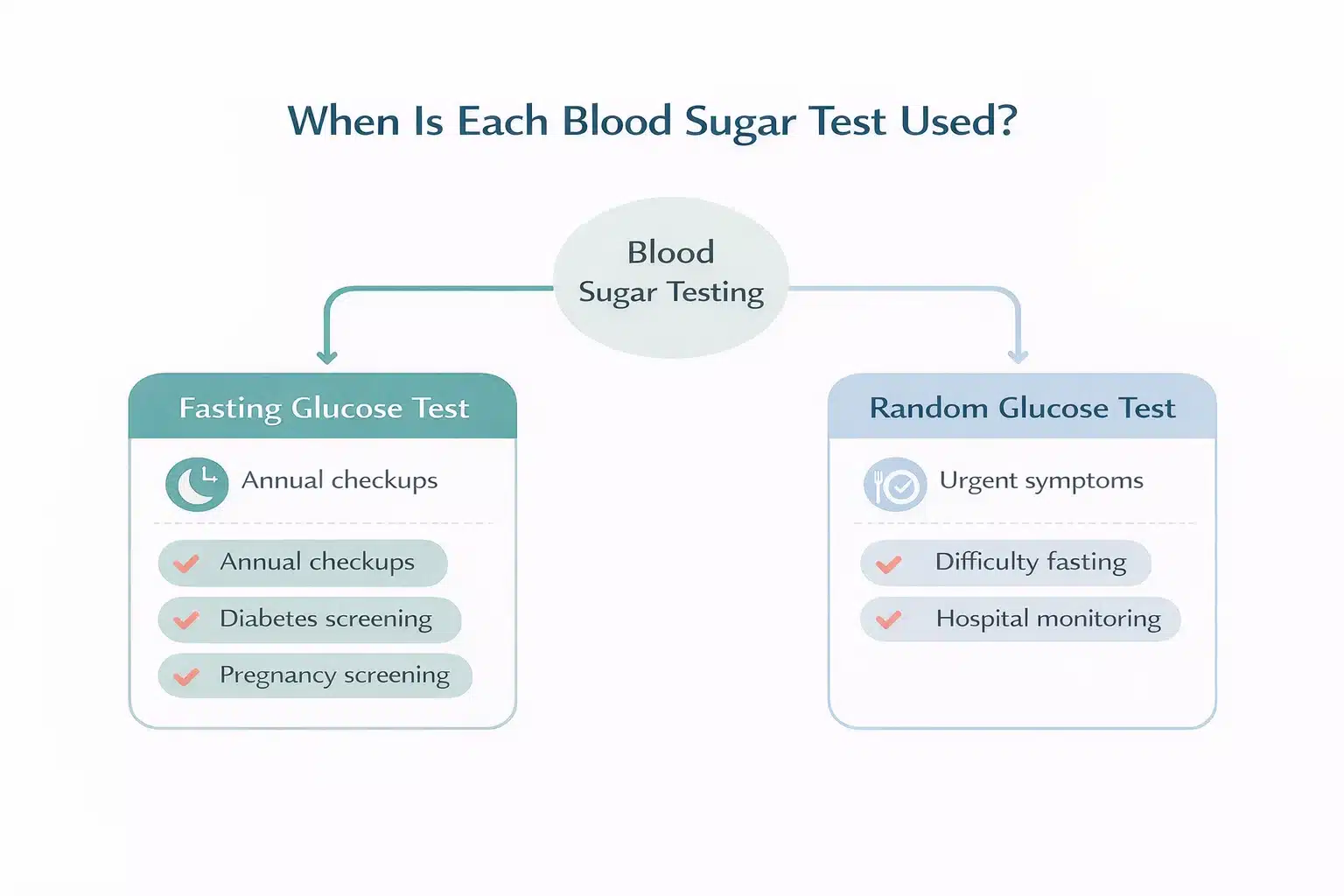
The fasting test is commonly used during annual checkups and preventive health screenings. If you have a family history of diabetes or other risk factors, your doctor may recommend periodic fasting glucose tests to catch any changes early. It is also frequently part of pregnancy-related diabetes screening, though specific protocols can differ.
A random glucose test, on the other hand, is more practical when someone walks into a clinic with symptoms that suggest high blood sugar and a quick answer is needed. It can also be useful for people who find it difficult to fast due to medication schedules or other health conditions. In hospital settings, random glucose readings help medical teams monitor patients throughout the day.
Ultimately, the choice between a fasting glucose vs random glucose test depends on the clinical scenario. Your doctor will decide which approach makes more sense based on your symptoms, history, and overall health goals.
Where HbA1c Fits In
You may have heard of the Glycosylated Hemoglobin (HbA1c) test, which works differently from both fasting and random glucose tests. Instead of capturing a single moment in time, HbA1c reflects your average blood sugar levels over the past two to three months.
This makes it a valuable tool for diabetes screening and long-term monitoring. Because it does not require fasting, some healthcare providers prefer it alongside or instead of a fasting glucose test. However, certain conditions can affect its accuracy, so your doctor will consider the bigger picture before relying on any single test.
Preparation Tips and Common Confusion
One of the most common mix-ups is arriving for a fasting glucose test without actually fasting. To get an accurate result, you should avoid eating or drinking anything other than water for at least 8 hours before your blood draw. Most people find it easiest to schedule the test first thing in the morning after an overnight fast.
For a random glucose test, no special preparation is needed. You can eat and drink normally beforehand. Just let your healthcare provider know about any medications you are taking, as some drugs can affect blood sugar levels.
Another frequent source of confusion is assuming that one test can replace the other. While both measure glucose, they serve different purposes. If your doctor specifically requests a fasting test, a random result will not be a suitable substitute.
Related Tests Worth Knowing About
If you or your doctor are looking into blood sugar health more broadly, a few key tests are worth knowing about. The Plasma Glucose (Fasting) test remains the go-to option for baseline screening. The Plasma Glucose (Random) test offers convenience when fasting is not possible. And the Glycosylated Hemoglobin (HbA1c) test fills the gap by showing average sugar control over a longer period.
Your healthcare provider may recommend one or a combination of these tests based on your individual needs and medical history.
Frequently Asked Questions
Do I need to fast for a fasting glucose test?
Yes. You should not eat or drink anything except water for at least 8 hours before the test. Most people schedule it in the morning after an overnight fast to make the process easier.
What is the difference between fasting and random glucose?
A fasting glucose test requires you to go without food for several hours, giving a baseline reading. A random glucose test can be done at any time regardless of when you last ate. The fasting glucose vs random glucose test distinction mainly comes down to timing and the clinical question your doctor is trying to answer.
Which test is better for diabetes screening?
There is no single “best” test for everyone. Fasting glucose is one of the most commonly used tests for diabetes screening, but HbA1c is also widely accepted. Your doctor may recommend one or both depending on your specific situation and risk factors.
Can food or stress affect my results?
Yes. Eating before a fasting test can lead to falsely elevated results. Stress, illness, and certain medications can also influence blood sugar readings. Always follow your doctor’s preparation instructions for the most accurate outcome.
Should I do an HbA1c or glucose test?
It depends on what your doctor wants to evaluate. A glucose test gives a snapshot of your blood sugar at one point in time, while HbA1c shows your average levels over two to three months. In many cases, doctors may recommend both for a more complete picture.
Your Blood Sugar, Your Peace of Mind
If your doctor has recommended blood sugar testing, or you’d like to stay proactive about your health, Chughtai Lab offers convenient and reliable testing across Pakistan. You can book a Plasma Glucose (Fasting) test along with other relevant panels to get a clear picture of your blood sugar health. Walk into any Chughtai Lab branch or book a home sample collection to get started.




