
Both ESR and CRP are blood tests that help detect inflammation in the body, but they work differently. The ESR test measures how quickly red blood cells settle in a tube over one hour, while CRP measures a specific protein released by the liver during inflammation. In simple terms, CRP tends to respond faster to changes, while ESR gives a broader picture over time. Your doctor may order one or both depending on what they are looking for.
Why ESR and CRP Are Often Confused
If your doctor has asked you to get blood work done to check for inflammation, you may have come across both ESR and CRP on your lab form. Many patients wonder why two tests are needed when both seem to measure the same thing. Understanding the esr vs crp test difference can help you feel more confident about why your doctor chose a particular test.
The confusion is understandable. Both tests are inflammation markers, and both are commonly used across Pakistan in routine check-ups and disease monitoring. However, each test picks up on inflammation in its own way, and knowing the difference can be reassuring when you are waiting for results.
What ESR Measures (In Plain Language)
ESR stands for Erythrocyte Sedimentation Rate. That sounds complicated, but the concept is quite simple. A blood sample is placed in a tall, thin tube, and the lab watches how fast your red blood cells sink to the bottom over one hour.
When there is inflammation in the body, certain proteins increase in the blood and cause red blood cells to clump together. These clumps are heavier, so they settle faster. A higher ESR reading may suggest that some level of inflammation is present. The ESR test is widely available and is one of the oldest and most commonly ordered tests in labs across Pakistan.
However, ESR is not very specific. It can be elevated for many reasons, including age, pregnancy, anemia, and certain chronic conditions. That is why doctors always look at ESR alongside your symptoms and other test results.
What CRP Measures (In Plain Language)
CRP stands for C-Reactive Protein. It is a protein produced by the liver that rises quickly when the body is dealing with inflammation or an infection. A Serum CRP test measures the level of this protein in your blood.
What makes CRP particularly useful is its speed. CRP levels can rise within hours of inflammation starting and can drop relatively quickly once the inflammation resolves. This makes it a helpful tool for doctors who want to track how a patient is responding to treatment or whether a flare-up is happening.
Like ESR, CRP does not tell your doctor exactly what is wrong. It simply signals that something in the body may need attention. Clinical interpretation by a qualified doctor is essential before drawing any conclusions.
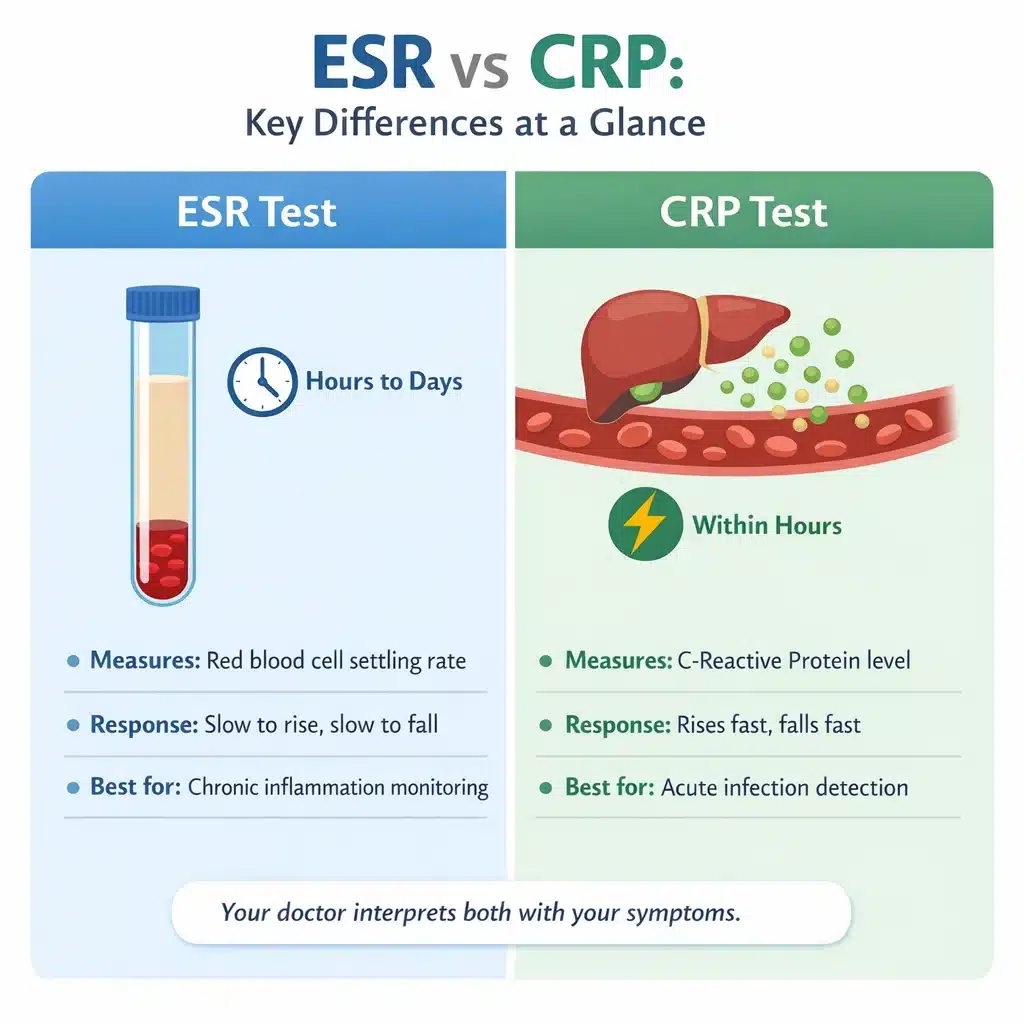
ESR vs CRP: Key Differences
While both tests point toward inflammation, there are important differences between them. The following comparison can help clarify how they differ.
Feature |
ESR |
CRP |
| What it measures | Rate at which red blood cells settle in a tube | Level of C-Reactive Protein in the blood |
| Speed of response | Slow to rise and slow to fall (days to weeks) | Rises within hours, falls quickly too |
| Specificity | Less specific; affected by age, gender, anaemia, pregnancy | More specific to active inflammation |
| Common use | Monitoring chronic conditions, general screening | Detecting acute infection, tracking treatment response |
| Influenced by | Many non-inflammatory factors | Primarily inflammation and infection |
As you can see, the esr vs crp test comparison shows that neither test is better in every situation. They serve different purposes, and doctors may use them together for a fuller picture.
When Doctors May Order ESR, CRP, or Both
Doctors choose between ESR, CRP, or both based on the clinical situation. There is no single rule that applies to every patient. Here are some general patterns.
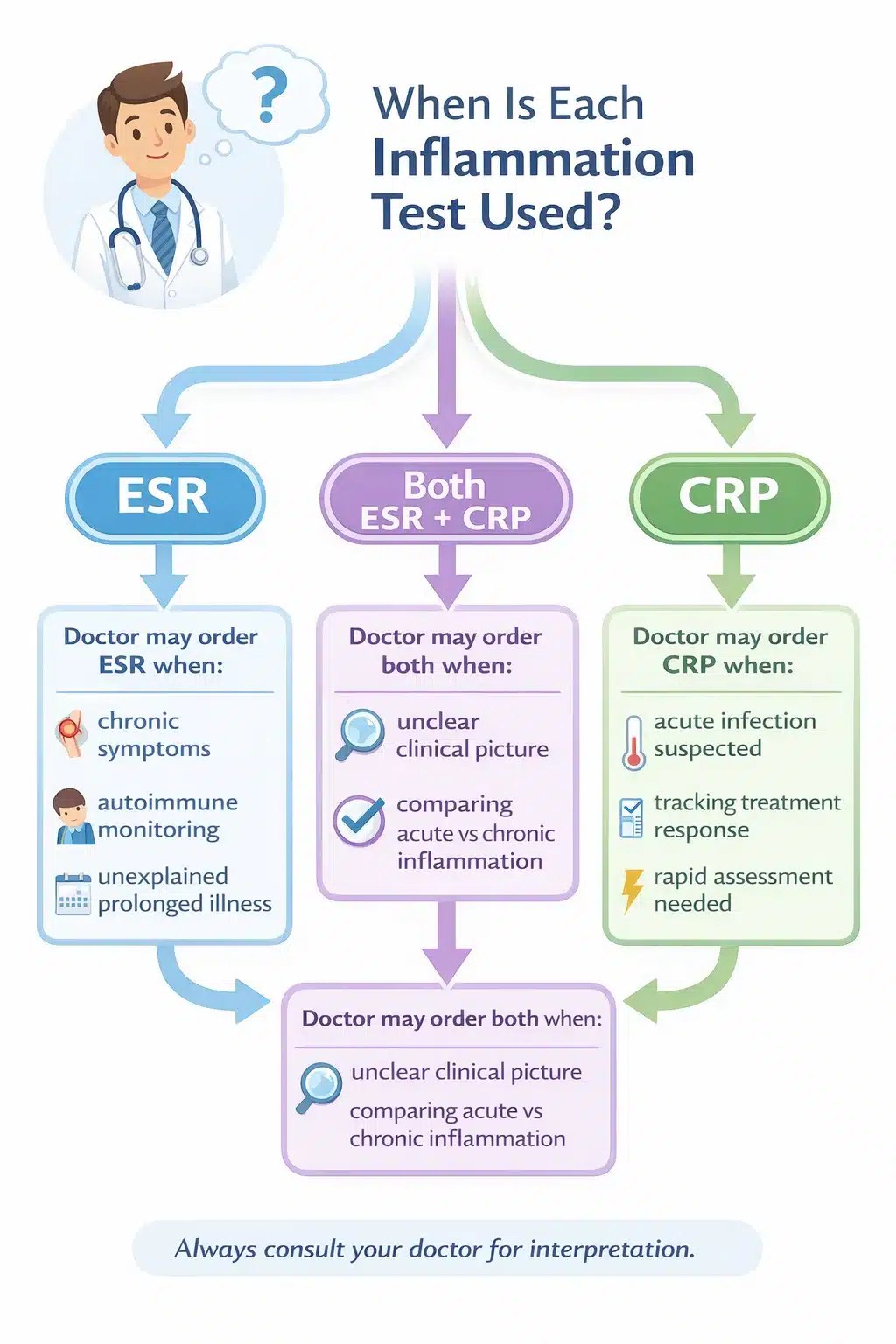
ESR may be ordered when a doctor wants to monitor ongoing or chronic conditions such as autoimmune disorders, joint-related complaints, or unexplained symptoms that have been present for a while. It can help assess the overall trend of inflammation over time.
CRP may be ordered when there is a need to quickly evaluate whether an acute infection or inflammatory episode is present. Because CRP levels change rapidly, it can help doctors make timely decisions. Infection screening is one of the most common reasons doctors request this test.
Both tests together may be ordered when the clinical picture is unclear, or when a doctor wants to compare the speed and pattern of inflammation. For example, a rising CRP with a stable ESR may suggest a new, acute issue on top of a chronic one.
Remember, your doctor will always interpret these results in the context of your overall health, symptoms, and medical history.
Limitations and Common Confusions
One of the most important things to understand about both ESR and CRP is that they are not diagnostic tests on their own. A raised ESR or CRP does not automatically mean you have a serious illness. Similarly, normal results do not always rule out a problem.
Several factors can influence your results. ESR, for instance, can be higher in older adults, during pregnancy, or in people with anaemia, even without any active disease. CRP can sometimes be mildly elevated after intense physical activity or due to obesity.
Reference ranges also vary depending on the lab, your age, and your sex. It is best not to compare your numbers with someone else or try to interpret them without medical guidance. Always discuss your results with your doctor, who can see the complete picture.
Where Procalcitonin (PCT) Fits
You may also hear about another test called Serum Procalcitonin (PCT). This marker is sometimes used by doctors when a bacterial infection is specifically suspected, particularly in hospital settings. Procalcitonin levels tend to rise more distinctly with bacterial infections compared to viral ones, which can help guide clinical decisions.
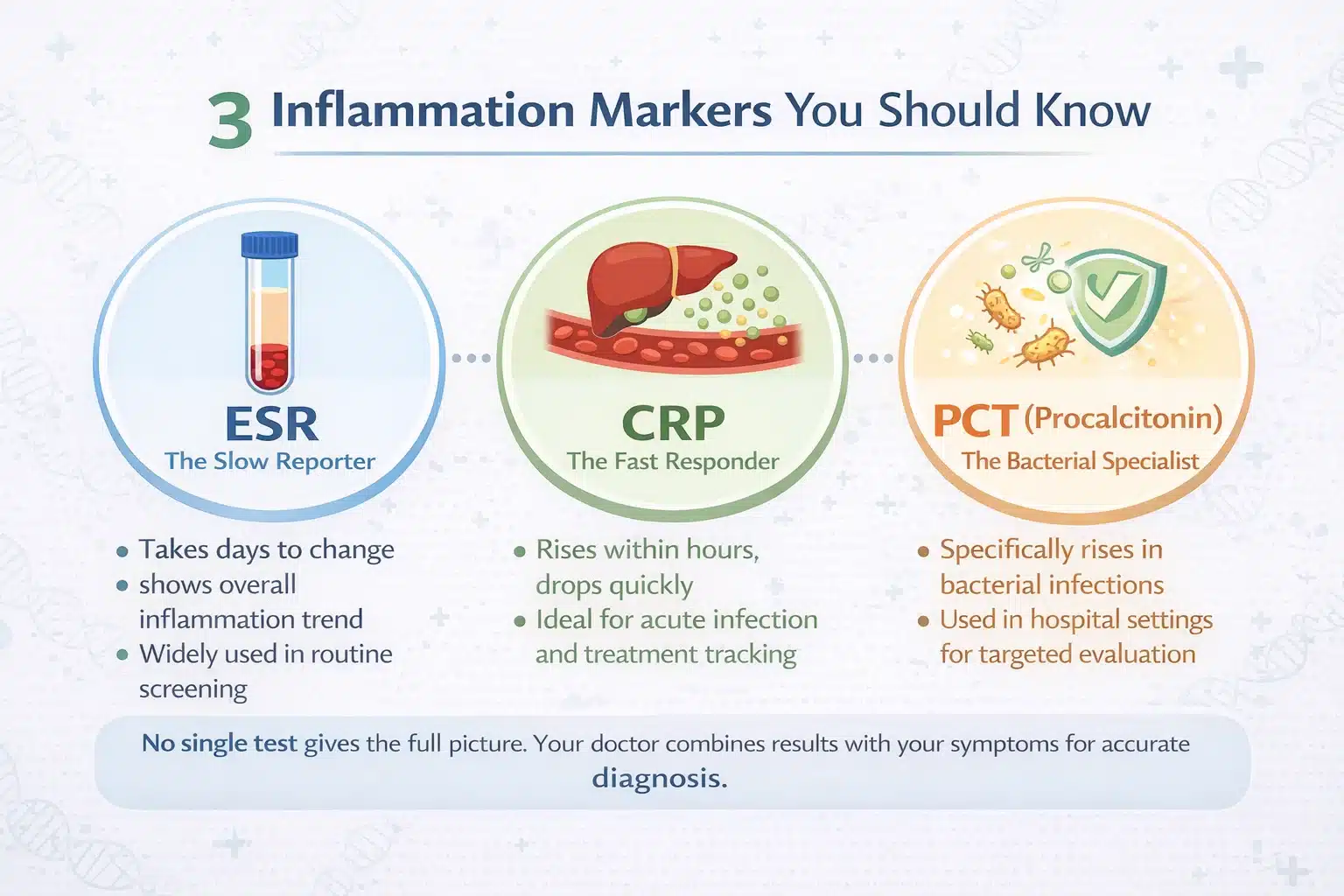
PCT is not a routine screening test and is generally ordered in more specific clinical scenarios. It is not a replacement for ESR or CRP, but rather an additional tool that doctors may use when they need more clarity. If your doctor recommends a Serum Procalcitonin (PCT) test, it is usually because the situation requires a more targeted evaluation.
Preparation and Timing
For most patients, ESR and CRP tests do not require any elaborate preparation. Your doctor or lab may give you specific instructions, but in general, these are straightforward blood tests that can be done during a regular visit.
Some labs may suggest fasting for certain panels if other tests are being done at the same time, so it is always a good idea to confirm with your healthcare provider or the lab beforehand. Timing can also matter; for example, if you are being monitored for a condition, your doctor may ask you to get tested at specific intervals to track changes.
If you have any concerns about preparation, simply ask your lab or doctor. They are the best source of advice for your individual case.
Related Tests
If your doctor has recommended ESR or CRP testing, you may also come across other tests that serve related purposes. The ESR test page provides detailed information about what to expect from this specific test. For CRP, the Serum CRP test page explains the process and its clinical relevance.
In some cases, doctors may also recommend a Complete Blood Count (CBC) or other markers alongside ESR and CRP to get a more comprehensive view of your health. Always follow your doctor’s recommendations on which tests to prioritise.
Frequently Asked Questions
Is ESR or CRP more accurate?
Neither test is inherently more accurate than the other. They measure different things. CRP responds more quickly to changes, making it useful for acute situations, while ESR gives a broader, slower-moving view. Your doctor will choose based on the clinical scenario.
Can ESR and CRP both be normal even if I feel unwell?
Yes, it is possible. Some conditions may not cause a significant rise in ESR or CRP, especially in early stages. If you continue to feel unwell, your doctor may order additional tests or investigations.
Do I need to fast before an ESR or CRP test?
Generally, fasting is not required specifically for ESR or CRP. However, if these tests are part of a larger blood panel, your doctor or lab may recommend fasting. Always confirm with your healthcare provider.
Can stress affect my ESR or CRP results?
While stress alone is unlikely to cause a major rise in ESR or CRP, chronic stress can contribute to low-grade inflammation in the body over time. If you have concerns about your results, discuss them openly with your doctor.
How often should I get these tests done?
There is no fixed schedule for everyone. Your doctor will recommend how often you should be tested based on your specific condition and treatment plan. Some patients may need regular monitoring, while others may only need these tests occasionally.
Take the Next Step
If your doctor has recommended an inflammation test, Chughtai Lab makes it easy and convenient. You can book your ESR test or Serum CRP test with confidence, knowing that your samples will be handled by experienced professionals using reliable methods.
For questions about which test is right for you, consult your doctor. And when you are ready, visit your nearest Chughtai Lab or book online to get tested at a time that works for you.




