
If you’re wondering which single test is most reliable for detecting iron deficiency, most doctors consider the ferritin test the best starting point. It reflects your body’s stored iron and can pick up a deficiency before other markers change. However, for a complete picture, doctors often look at ferritin alongside serum iron, TIBC, and transferrin saturation together.
Why This Comparison Matters
Iron deficiency is one of the most common nutritional problems in Pakistan, especially among women, children, and older adults. But when you look at a lab test menu, you’ll see several iron-related tests, and it’s not always clear which one you actually need.
Understanding the difference between ferritin, serum iron, and TIBC can help you have a more informed conversation with your doctor. Each test measures something slightly different, and relying on just one may not tell the full story. That’s exactly why the comparison of Ferritin vs Iron vs TIBC matters. These tests complement each other, and knowing what each one shows can save time and avoid confusion.
What Ferritin Shows
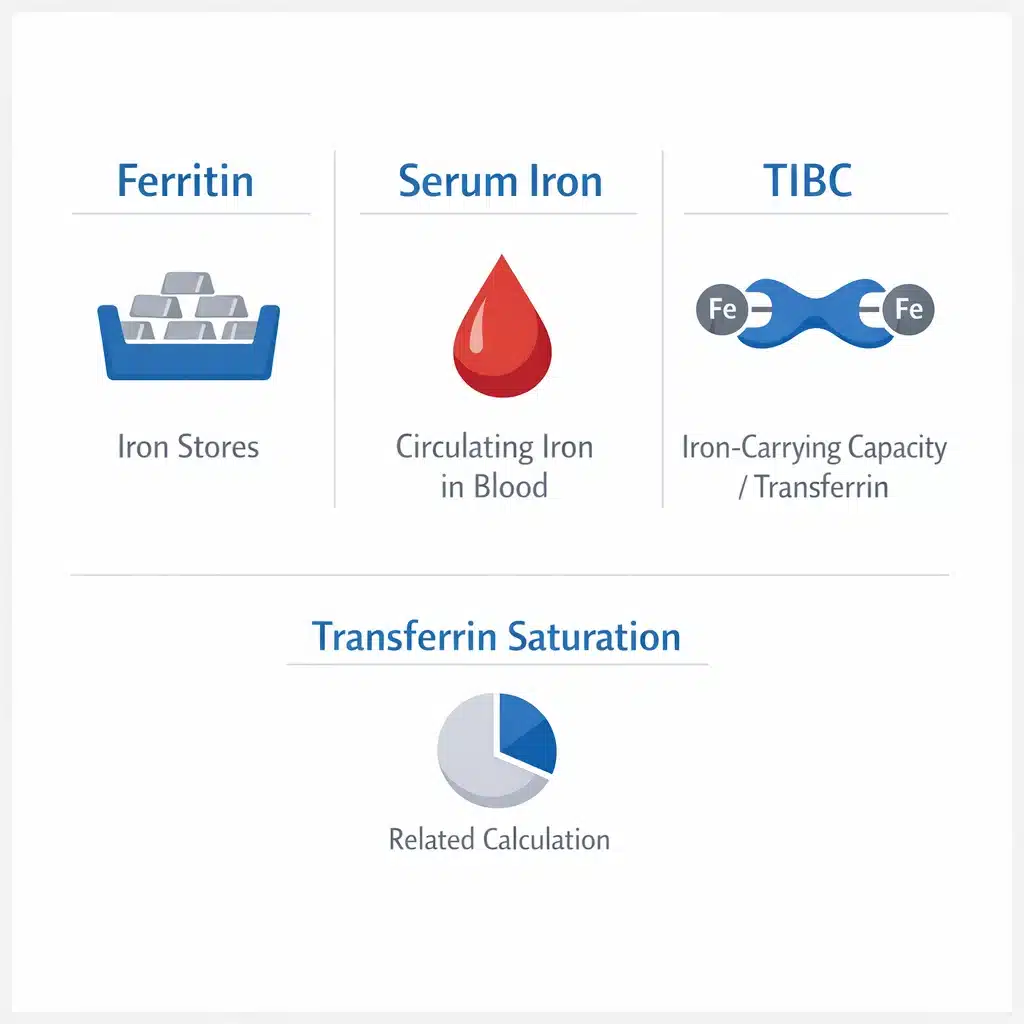
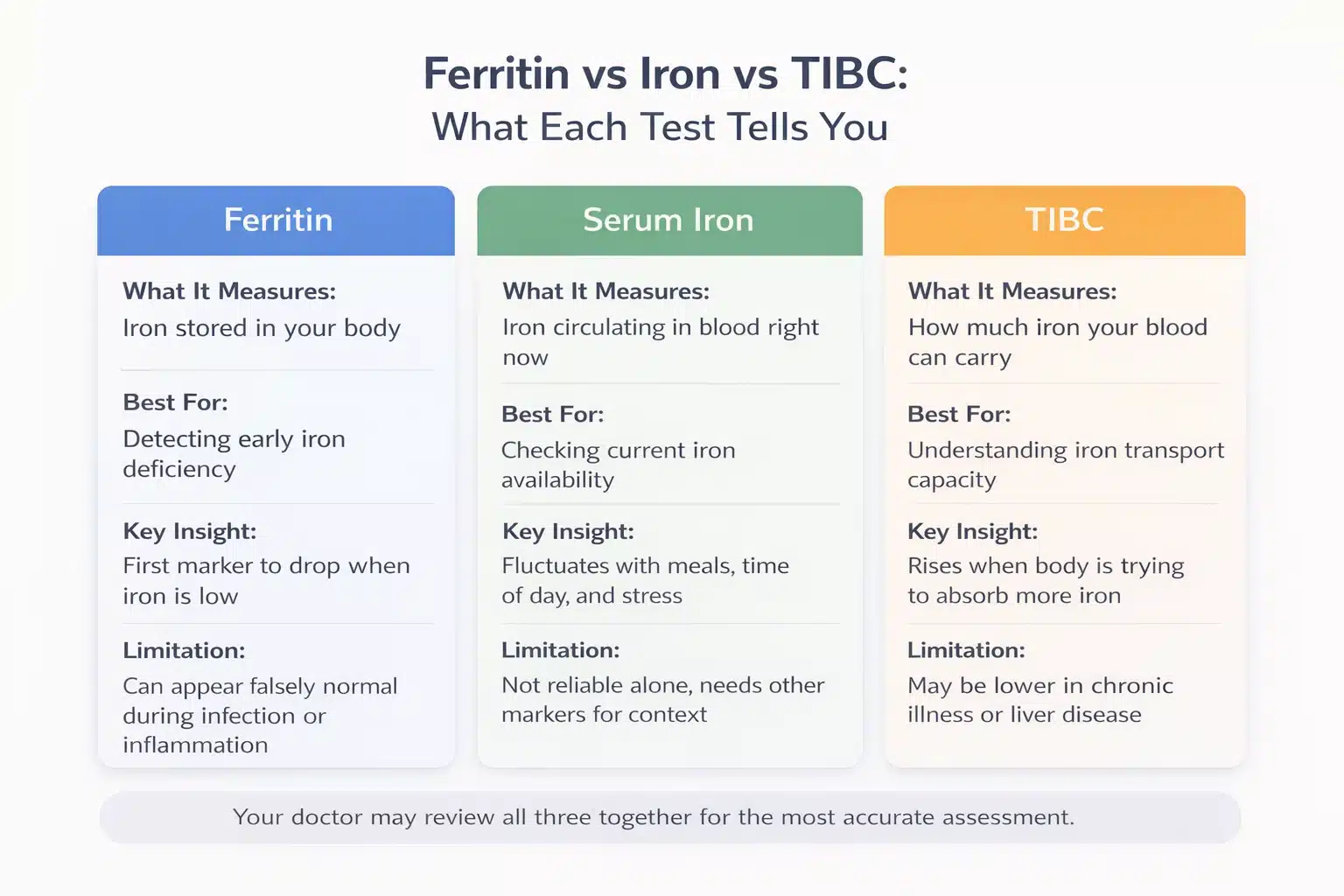
Ferritin is a protein that stores iron inside your cells. When your body has enough iron, ferritin levels tend to be within a healthy range. When iron stores start dropping, even before you feel symptoms, ferritin is usually the first marker to fall.
This is why the Serum Ferritin test is often the first test doctors order when iron deficiency is suspected. A low ferritin level may indicate that the body’s iron reserves are depleted, which can eventually lead to anaemia if not addressed.
It’s worth noting that ferritin can sometimes appear normal or even elevated during infections, inflammation, or liver conditions, even when iron stores are actually low. This is because ferritin also acts as an inflammatory marker. In such cases, your doctor may recommend additional tests to get a clearer picture.
What Serum Iron Shows
The Serum Iron test measures the amount of iron circulating in your blood at a given moment. Unlike ferritin, which reflects stored iron, serum iron tells you how much iron is currently available for your body to use, such as producing red blood cells.
However, serum iron levels can fluctuate throughout the day and are affected by recent meals, time of testing, and even stress. Because of this variability, serum iron alone is not considered the most reliable indicator of iron deficiency. It is most useful when interpreted alongside other iron markers.
What TIBC Shows
TIBC stands for Total Iron-Binding Capacity. It measures how much transferrin (the protein that carries iron in your blood) is available to bind iron. Think of it as measuring how many “empty seats” are available on the iron transport system.
When iron levels are low, your body produces more transferrin to try and capture as much iron as possible. This means Serum TIBC levels tend to rise when iron stores are depleted. A high TIBC result, combined with low ferritin or low serum iron, may point toward iron deficiency.
On the other hand, TIBC may be lower than expected in conditions like chronic illness or liver disease, so doctors always interpret it in context.
What Transferrin Saturation Shows
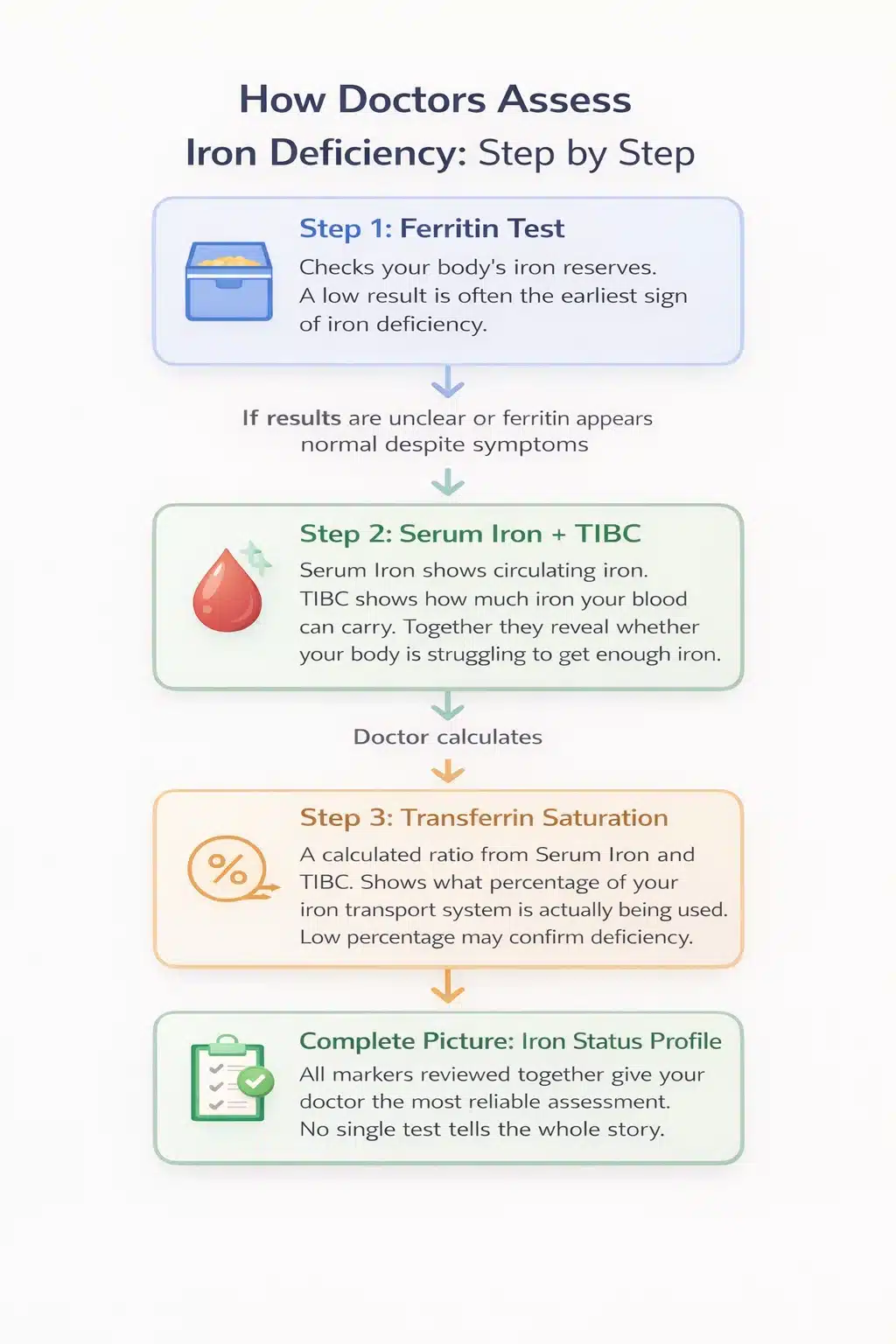
Transferrin Saturation is not a separate lab measurement. It’s a calculated value derived from your serum iron and TIBC results. It tells you what percentage of your transferrin is actually carrying iron.
A low transferrin saturation may suggest that not enough iron is available for your body’s needs, even if individual serum iron or TIBC numbers seem borderline. Many doctors find this ratio particularly helpful because it combines two data points into a single, more meaningful number.
Which Test Is Best for Iron Deficiency?
When it comes to a single, standalone iron deficiency test, the ferritin test is generally considered the most useful first step. It directly reflects how much iron your body has in reserve, and a clearly low result is a strong indicator that iron stores are depleted.
That said, no single test gives the full picture on its own. In practice, doctors frequently order a combination, sometimes called an Iron Status Profile, that includes ferritin, serum iron, TIBC, and transferrin saturation together. This combination allows your doctor to:
- Distinguish between iron deficiency and other causes of anaemia
- Detect early-stage depletion before symptoms develop
- Identify cases where ferritin may be misleadingly normal due to inflammation
So while ferritin is the strongest individual marker, the most accurate assessment comes from reviewing multiple results together.
When Doctors May Recommend These Tests
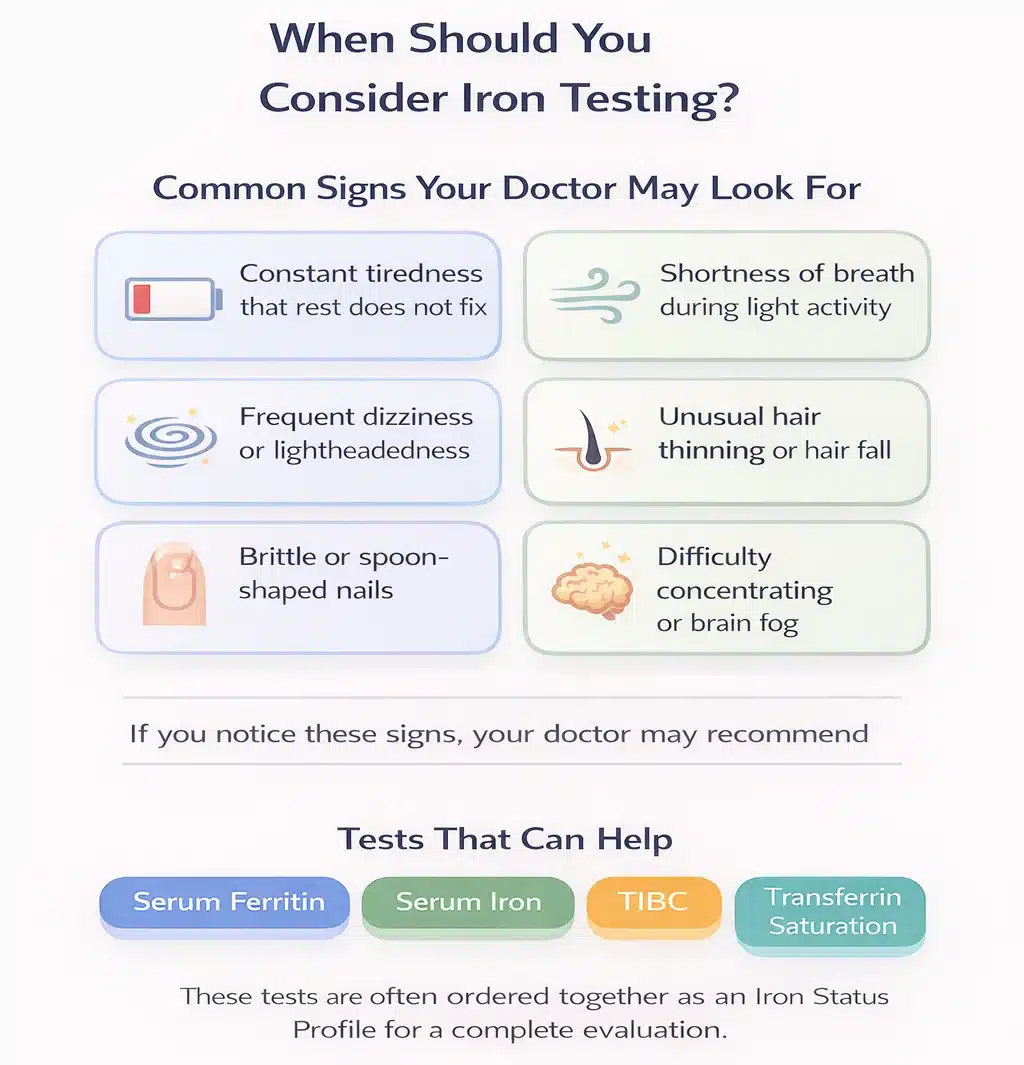
Your doctor may suggest one or more iron-related tests if you experience symptoms such as:
- Persistent tiredness or weakness
- Pale skin or brittle nails
- Dizziness or shortness of breath
- Difficulty concentrating
These tests are also commonly recommended during pregnancy, for women with heavy menstrual cycles, for growing children, and for patients with chronic conditions where iron metabolism may be affected.
It’s important to remember that symptoms alone are not enough for diagnosis. Lab results, interpreted by a qualified healthcare professional, are needed to confirm whether iron deficiency is present and how severe it may be.
Preparation and Common Questions
One common point of confusion is whether you need to fast before iron-related tests. Many labs and doctors recommend fasting (typically 8–12 hours) before a serum iron test, as food intake can temporarily raise iron levels and affect accuracy. For the ferritin test, fasting is generally not required, though your doctor may advise it depending on the situation.
Another frequent question is whether all these tests need to be done at the same time. While they can be ordered individually, getting them together in a single panel gives a more complete and reliable picture. This is especially helpful when results from one test are unclear or borderline.
Always follow the specific preparation instructions given by your lab or doctor, as guidelines may vary.
Related Tests
If your doctor suspects iron deficiency or wants to rule out related conditions, they may also look at a complete blood count (CBC) alongside the iron markers discussed above. The tests covered in this article, including Serum Ferritin, Serum Iron, Serum TIBC, and Transferrin Saturation, are the core components of a thorough iron assessment. For convenience, many labs offer these bundled as an Iron Status Profile.
FAQs
Is the ferritin test enough to diagnose iron deficiency?
A low ferritin level is a strong indicator of depleted iron stores, but your doctor may recommend additional tests like serum iron or TIBC to confirm the diagnosis and understand the full picture. Results should always be reviewed by a healthcare professional.
Can my serum iron be normal even if I’m iron deficient?
Yes. Serum iron measures circulating iron at a single point in time and can fluctuate. Your stored iron (ferritin) may already be low even if your serum iron appears within range, which is why doctors often check both.
What does a high TIBC result mean?
A high TIBC generally means your body is trying to absorb more iron because stores are low. It may indicate iron deficiency, especially when combined with low ferritin. However, your doctor will interpret it alongside your other results.
Do I need to fast before these tests?
Fasting is typically recommended before a serum iron test to improve accuracy. Ferritin testing usually does not require fasting, but always follow the instructions provided by your doctor or lab.
Should I get all iron tests done together?
Getting ferritin, serum iron, TIBC, and transferrin saturation together gives the most complete assessment. Many labs offer these as part of an Iron Status Profile, which can be a practical option if your doctor recommends a thorough evaluation.
Get Your Iron Levels Checked with Confidence
If you or your doctor want to check your iron levels, the Serum Ferritin test is a reliable place to start. For a more complete evaluation, consider the Iron Status Profile, which includes ferritin along with serum iron, TIBC, and transferrin saturation in a single panel. Talk to your doctor about which option is right for you, and get tested at a Chughti Lab for accurate, dependable results.



