
Heart Health Profile
The heart is one of the most vital organs in the human body, responsible for maintaining continuous blood circulation and supplying oxygen and nutrients to every organ of the body.
Optimal heart function is crucial for overall health and longevity. However, in recent decades, the incidence of cardiovascular diseases (or heart diseases) has increased significantly due to factors such as sedentary lifestyle, unhealthy diet, stress, obesity, smoking, and unmanaged medical conditions like diabetes and hypertension (high blood pressure).
Regular assessment of heart health is, therefore, a crucial aspect of preventive healthcare. Early detection of risk factors enables timely intervention and reduces the likelihood of developing severe cardiac conditions.
What is a Heart Health Profile?
A Heart Health Profile is a comprehensive diagnostic evaluation that assesses various biochemical parameters related to cardiovascular function. It goes beyond standard cholesterol measurement and includes advanced tests that evaluate lipid balance, long-term blood sugar control, systemic inflammation, and apolipoprotein levels.
Collectively, these tests provide a detailed overview of an individual’s heart disease risk status, helping healthcare professionals formulate personalized strategies for prevention and management.
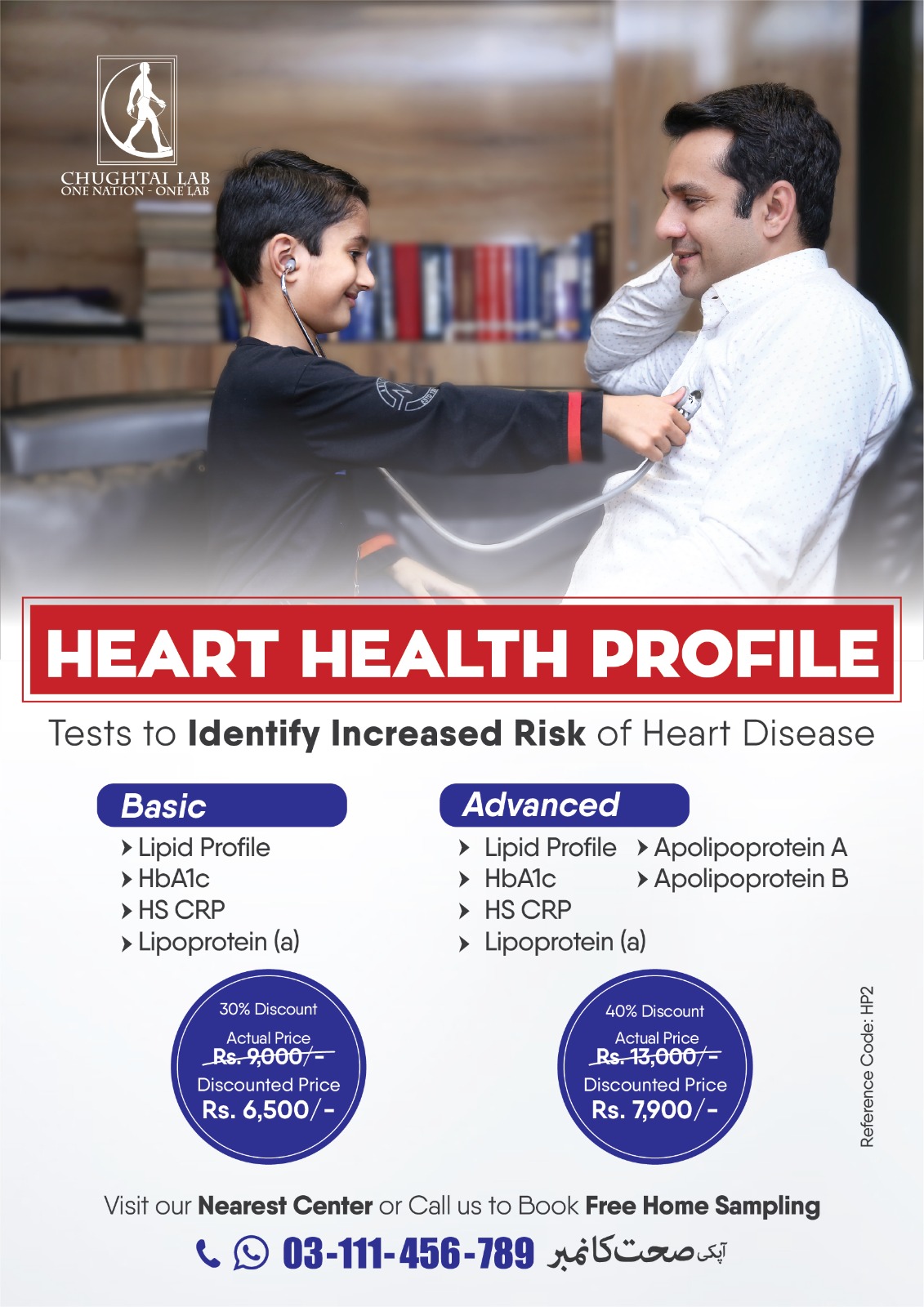
Basic
Price After Discount (30% off)
Rs. 6,500/-
Advance
Price After Discount (40% off)
Rs. 7,900/-
Experience our Free Home Sampling service
for quick & convenient test sample collection.
Why Undergo a Heart Health Profile?
- Early Identification of Risk: The tests can detect small changes in your body, such as high cholesterol, sugar, or inflammation, even before any clinical symptoms appear.
- Comprehensive Risk Evaluation: It considers several key factors of heart health, not just cholesterol, to provide a more comprehensive understanding of the overall cardiovascular disease risk.
- Guided Medical Decisions: The heart health profile enables healthcare professionals to recommend targeted lifestyle modifications and therapeutic measures.
- Monitoring and Prevention: If someone already has conditions like diabetes, high blood pressure, or high cholesterol, these tests help check how well the treatment or lifestyle changes are working.
Who Should Get a Heart Health Profile?
A Heart Health Profile is recommended for anyone who wants to understand their risk of heart disease and protect their heart health. However, it is especially essential for people who may be at higher risk of developing cardiovascular disease.
You should consider taking this test if you:
- Have a family history of heart disease, stroke, or high cholesterol
- Have high blood pressure or diabetes
- Have obesity
- Smoke or use tobacco products
- Lead a sedentary lifestyle (little or no physical activity)
- Frequently experience stress or follow an unhealthy diet
- Have already been diagnosed with high cholesterol or are taking cholesterol-lowering medication
Even if you feel healthy, a Heart Health Profile helps you know your current status and take preventive steps early. Regular screening allows your doctor to track any changes over time and guide you toward a healthier heart.
What does the Heart Health Profile include?
The heart health profile at Chughtai Lab includes the following tests.
Lipid Profile
A lipid profile (or a lipid panel) examines the amount of fat in the blood. The test results may indicate the risk of a heart attack or other heart conditions. The test assesses the following.
- Total Cholesterol: This test measures the amount of cholesterol in the blood.
- Low-density lipoprotein (LDL) cholesterol: It is also known as the “bad” cholesterol. High levels of LDL cholesterol lead to artery blockage due to plaque accumulation.
- High-density lipoprotein (HDL) cholesterol: It is also known as “good” cholesterol, which helps keep the arteries open and enhances blood flow by removing the LDL cholesterol.
- Non-high-density lipoprotein cholesterol (non-HDL-C): It is the total cholesterol minus HDL cholesterol and contributes to plaque formation in arteries.
- Triglycerides: This is another type of blood fat. High levels may raise the risk of heart disease.
Hemoglobin A1c (HbA1c) Test
The HbA1c test helps diagnose diabetes, which raises the risk of heart disease. This blood test shows your average blood sugar level over the past two to three months. High results mean your blood sugar has been too high for too long, which can damage blood vessels and increase heart disease risk.
High-sensitivity CRP (hs-CRP) Test
This test measures a low level of C-reactive protein (CRP) in the blood to identify slight, but long-lasting, inflammation in the body. This kind of hidden inflammation can be a sign that you have a higher risk of heart disease, like a heart attack or stroke. Even a small increase in CRP levels may mean there’s irritation or damage in your blood vessels.
Lipoprotein (a) Test
The Lipoprotein (a) test measures a special type of LDL cholesterol particle that can increase the risk of heart disease and stroke. High levels of Lp(a) can cause cholesterol to build up in arteries, even if your regular cholesterol levels are normal. This test helps identify hidden genetic risks that may not appear in a standard lipid profile.
Apolipoprotein A1 (ApoA1) Test
The Apo A1 test measures the main protein found in HDL cholesterol (the “good” cholesterol). Apo A1 helps to transport excess cholesterol from the arteries back to the liver for removal from the body. Higher levels of Apo A1 are associated with better heart health and a lower risk of heart disease.
Apolipoprotein B (ApoB) Test
The ApoB test measures the main protein found in LDL cholesterol (the “bad” cholesterol). Each LDL particle has one ApoB molecule, so measuring ApoB shows how many potentially harmful cholesterol particles are in your blood. High Apo B levels can increase the risk of plaque buildup in arteries and cardiovascular disease.
How to Prepare for the Heart Health Profile Test?
Ask your doctor if you need to stop taking any supplements or medicines before the blood draw. Certain medications can influence the findings of a blood test. Consult your doctor before discontinuing any medication.
A blood test may require you to fast or cease eating and drinking. Ask your doctor if you need to fast before the test.
What are the Ideal Ranges and What Do the Results Mean?
After you get your results, compare them with the reference values. Your doctor will go over your results with you and discuss any next steps in your care.
Lipid Profile
The results may vary depending on the type of cholesterol and are presented in milligrams per deciliter (mg/dL).
The test ranges are as follows:
Total Cholesterol
- Ideal range: Less than 200 mg/dL
- Borderline High: 200 – 240 mg/dL
- High: Higher than 240 mg/dL
LDL Cholesterol
- Ideal range: Less than 100 mg/dL
- Above Desirable: 100 – 129 mg/dL
- Borderline High: 130 – 159 mg/dL
- High: 160 – 189 mg/dL
- Very High: Higher than or Equal to 190 mg/dL
HDL Cholesterol
- Low: Less than or Equal to 40 mg/dL
- Normal: Higher than 40 mg/dL
Non-HDL Cholesterol
- Ideal: Less than 130 mg/dL
- Above Desirable: 130 – 159 mg/dL
- Borderline High: 160 – 189 mg/dL
- High: 190 – 219 mg/dL
- Very High: Higher than or Equal to 220 mg/dL
Triglycerides
- Normal: Less than 150 mg/dL
- Borderline High: 150 – 199 mg/dL
- High: 200 – 499 mg/dL
- Very High: Higher than or Equal to 500 mg/dL
Hemoglobin A1c (HbA1c)
The results of this test show a normal, pre-diabetic, and diabetic range.
- Normal: Less than 5.7%
- Pre-Diabetes: 5.7 – 6.4%
- Diabetes: Higher than 6.4%
High-sensitivity CRP (hs-CRP) Test
Results indicate your heart and blood vessel disease risk level. The test ranges are as follows:
- Low Risk: Less than 1.0 mg/L.
- Intermediate Risk: 0 to 3.0 mg/L.
- High Risk: Higher than 3.0 mg/L.
Lipoprotein (a) Test
Even if your cholesterol is normal and you are in good health, a high lipoprotein (a) level may indicate that you are at high risk for heart and blood vessel disease. Your doctor will likely discuss managing your heart disease risk factors, particularly your LDL levels.
The test ranges are as follows:
- Low Risk: Less than 75 nmol/L
- Intermediate Risk: 75 – 124 nmol/L
- Enhanced Risk: Higher than or Equal to 125 nmol/L
Apolipoprotein A1
A higher Apolipoprotein A1 (Apo A1) level usually means you have more “good” HDL cholesterol, which helps remove excess cholesterol from your arteries and lowers your risk of heart disease. It is generally a sign of better heart health.
The test ranges are as follows:
- Low: Less than 1.04 g/L
- Normal: 1.04 – 2.02 g/L
- High: Higher than 2.02
Apolipoprotein B
A higher Apolipoprotein B (Apo B) level means there are more “bad” cholesterol particles in your blood, which can build up in the arteries and increase the risk of heart disease. It is typically an indicator of an increased risk for heart disease.
The test ranges are as follows:
- Low: Less than 0.66 g/L
- Normal: 0.66 – 1.44 g/L
- High: Higher than 1.44 g/L
Why Choose Chughtai Lab for Heart Health Profile?
- Comprehensive & Advanced Testing: We go beyond basic cholesterol checks. Our profile includes advanced heart risk markers like hs-CRP, Apo A1, Apo B, and Lipoprotein (a) for a complete picture of your heart health.
- Accurate & Reliable Results: We use state-of-the-art equipment and internationally accepted testing methods to ensure precision and consistency.
- Qualified Medical Experts: Your reports are reviewed by experienced pathologists and medical specialists, ensuring every result is carefully interpreted.
- Fast Turnaround Time: You can receive your detailed heart health report within 24–48 hours, allowing you to take timely action.
- Trusted by Thousands: We are proud to be a trusted diagnostic partner for individuals, families, and healthcare professionals across the region.
- Comfortable & Hassle-Free Experience: Enjoy convenient sample collection, minimal waiting time, and courteous staff, making your health check smooth and stress-free.
- Easy Sample Collection: Our expert professionals ensure that the sample collection procedure is quick and safe, and it is done under hygienic conditions. Additionally, Chughtai Lab offers home sample collection services for comfortable and convenient sample collection. You can book an appointment for your heart health profile via Chughtai Lab’s official website, Mobile app, or Call/ WhatsApp at Aap-ki-sehat-ka-number 03-111-456-789.
FAQs (Frequently Asked Questions)
Yes! You can now get a comprehensive picture of your heart health with Chughtai Lab’s Heart Health Panel. By integrating both traditional and advanced biomarkers, the Heart Health Profile empowers individuals and clinicians to detect risks early and take preventive action.
Chughtai Lab’s heart health profile is available in two categories:
Basic
- Lipid Profile
- HbA1c
- HS CRP
- Lipoprotein (a)
Advanced
- Lipid Profile
- HbA1c
- HS CRP
- Lipoprotein (a)
- Apolipoprotein A1
- Apolipoprotein B
The Chughtai lab heart health test prices are as follows:
Basic
- Actual Price: Rs. 9,000/-
- Discounted Price: Rs. 6,500/- (30% off)
Advanced
- Actual Price: Rs. 13,000/-
- Discounted Price: Rs. 7,900/- (30% off)
You can book a heart health profile test online through Chughtai Lab’s web portal, mobile app, or Aap Ki Sehat Ka Number – 03-111-456-789. At Chughtai Lab, we provide a hassle-free testing service for patients at home. Moreover, if you are looking for a heart health profile test near me, reach out to your nearest Chughtai Lab outlet. To know the price of the tests and other information, feel free to contact us.
Yes, you can check the results of your heart health profile via the Chughtai Lab mobile app and WhatsApp. We update our clients via message when their reports are ready.
Yes, Chughtai Lab provides the facility of home sample collection for the heart health profile.